Bed bug treatment in Boise typically costs $450 to $1,200 per home and runs a 3-visit EPA-aligned protocol over 28-30 days to break the egg-hatch cycle. Boise Bug Bombers inspects mattress seams, box-spring corners, and baseboard harborage, then applies residual plus an insect growth regulator (IGR). Same-week scheduling. Confidential service for homes, hotels, and multi-family.
SERVICE · CONFIRMED INFESTATION TREATMENT · IDAHO-LICENSED APPLICATOR
Bed bug treatment in Boise.
Heat for confirmed infestations. Chemical for early-stage. 14-day follow-up included on every job.
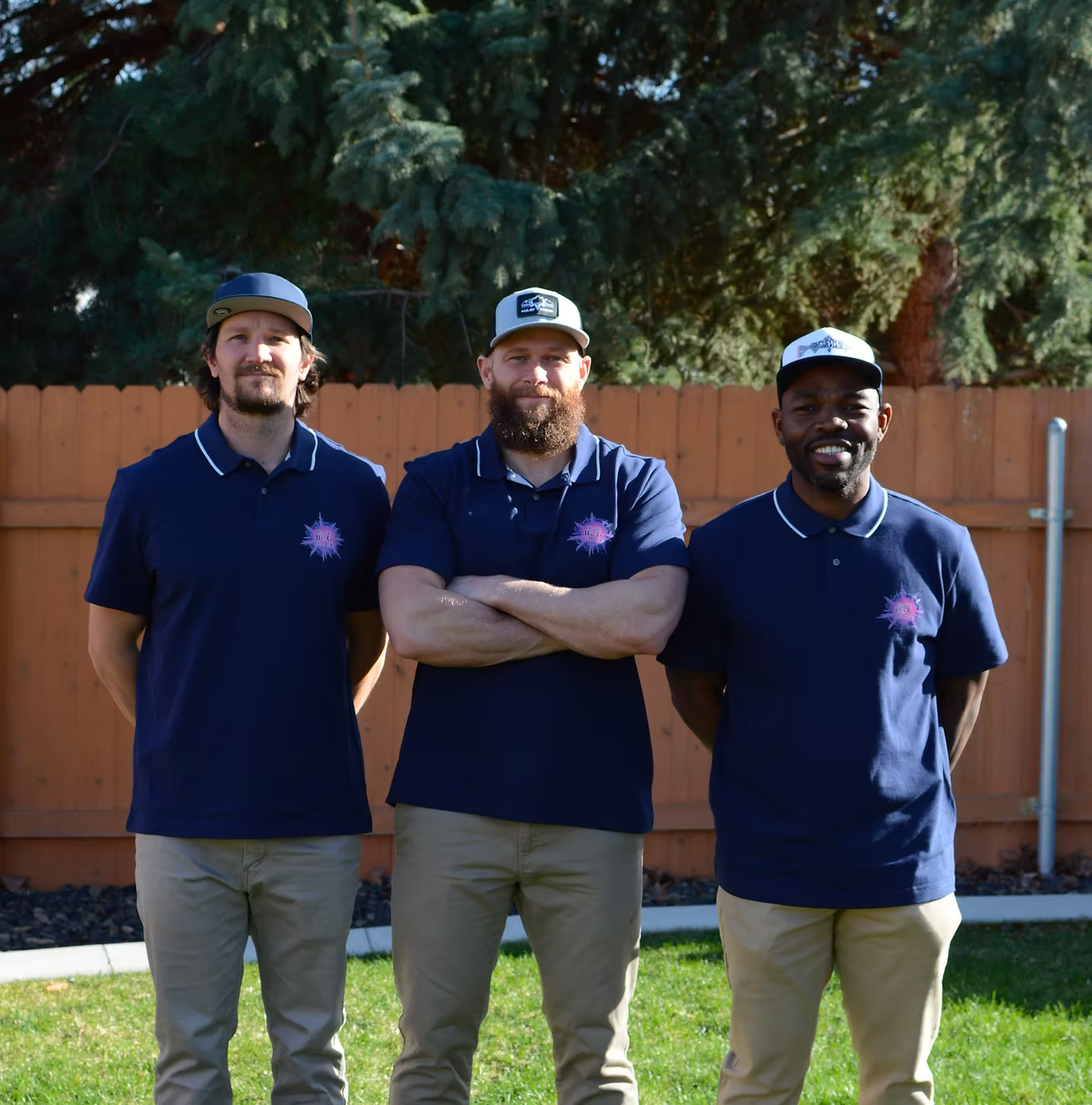
Bed bug treatment in the Treasure Valley typically takes one of two forms: a single-day heat treatment that raises the entire affected space to 120-135°F (the only proven single-treatment approach) or a two-pass chemical and crack-and-crevice treatment scheduled 14 days apart to break the egg-hatch cycle. Boise Bug Bombers inspects first, confirms the species, recommends the right approach for the infestation stage, and includes the 14-day follow-up in the price. Our ISDA-licensed team, Hillard, Jordan, and Bradley, handles the work, Idaho State Department of Agriculture (ISDA)-licensed (#96328), with USDA-approved products that are kid- and pet-safe once dry.
Bed bug treatment in 2026 comes down to two evidence-supported approaches: thermal (heat) treatment, which raises the entire room or unit to 120-135°F for several hours and kills bed bugs at all life stages including eggs in a single pass; and chemical treatment, which applies EPA-registered residual products in two passes 14 days apart to break the egg-hatch cycle. Per CDC and EPA guidance, both approaches work when applied correctly; the right one depends on infestation severity, structure type, and budget.
Below: when each one is the right call, what they actually cost, and why “a single chemical visit” is the most common reason a bed bug treatment fails.
How does bed bug treatment work in Boise?
2A. Heat treatment (thermal remediation)
What it is. Specialized propane- or electric-powered heaters raise the affected space to a sustained 120-135°F for 4 to 8 hours. Per EPA bed bug guidance, bed bugs die at 119°F over time; the higher target plus sustained exposure kills bed bugs at all life stages, adults, nymphs, and eggs, in a single treatment.
When it’s the right call. Confirmed moderate-to-severe infestations, infestations that have spread beyond one bedroom, situations where the residents need the problem gone in a single day, and properties where chemical residual is undesirable (newborns, immunocompromised residents, electronics-heavy rooms).
What’s included with Boise Bug Bombers. Pre-treatment prep walk-through, full thermal application with monitored thermometers placed throughout the space, sealing of egress points so bed bugs don’t migrate to adjacent rooms during the heat, post-treatment inspection, and a 14-day follow-up inspection included in the base price.
What residents need to do. Pre-treatment prep is real and matters: removing items that can’t take heat (candles, certain medications, pressurized aerosols, some electronics), washing and high-heat-drying linens, vacuuming the affected space. Boise Bug Bombers provides a written prep checklist on inspection.
Pricing range. $1,200 to $2,800 for a typical Boise single-family room or unit depending on square footage and complexity. The phone quote is the door quote.
2B. Chemical treatment (two-pass residual)
What it is. EPA-registered residual products applied as a crack-and-crevice treatment to the affected space, bed frame, box spring, baseboards, behind outlets, behind picture frames, and any harborage identified during inspection. Per EPA bed bug guidance, a second pass scheduled 14 days after the first is required to break the egg-hatch cycle because bed bug eggs are resistant to most chemical actives.
When it’s the right call. Early-stage infestations contained to one bed or one room, confirmed but limited infestations where heat would be over-scoped, single-resident situations where the residents can vacate for a few hours per pass.
What’s included with Boise Bug Bombers. Pre-treatment inspection, written prep checklist, first chemical pass, 14-day re-inspection, second chemical pass on day 14, post-treatment inspection on day 21, and a 30-day satisfaction window.
What residents need to do. Vacate the space for the dry-down window (typically 2-4 hours per pass), launder all linens at high heat between visits, follow the written prep checklist on harborage prep, and keep the 14-day follow-up visit on calendar, skipping the second pass is the most common reason chemical treatment fails.
Pricing range. $445 to $895 for a typical Boise single-family one-room treatment depending on harborage complexity and home size. The phone quote is the door quote.
What we treat
hemical treatment (two-pass residual)
What it is. EPA-registered residual products applied as a crack-and-crevice treatment to the affected space, bed frame, box spring, baseboards, behind outlets, behind picture frames, and any harborage identified during inspection. Per EPA bed bug guidance, a second pass scheduled 14 days after the first is required to break the egg-hatch cycle because bed bug eggs are resistant to most chemical actives.
When it’s the right call. Early-stage infestations contained to one bed or one room, confirmed but limited infestations where heat would be over-scoped, single-resident situations where the residents can vacate for a few hours per pass.
What’s included with Boise Bug Bombers. Pre-treatment inspection, written prep checklist, first chemical pass, 14-day re-inspection, second chemical pass on day 14, post-treatment inspection on day 21, and a 30-day satisfaction window.
What residents need to do. Vacate the space for the dry-down window (typically 2-4 hours per pass), launder all linens at high heat between visits, follow the written prep checklist on harborage prep, and keep the 14-day follow-up visit on calendar, skipping the second pass is the most common reason chemical treatment fails.
Pricing range. $445 to $895 for a typical Boise single-family one-room treatment depending on harborage complexity and home size. The phone quote is the door quote.
Bed bug treatment fails most often because the operator quoted a single chemical visit and the homeowner didn’t know the second pass at day 14 was non-negotiable. Bed bug eggs are physically protected by their casing and resist most chemical actives. The eggs hatch on roughly a 10-14 day cycle. A single chemical visit kills the adults and nymphs present at the visit; the surviving eggs hatch a week later; the new generation reaches reproductive maturity in 4-5 weeks; the infestation is back. Heat treatment avoids this trap by killing eggs in the single thermal pass. Chemical treatment matches it by scheduling the second pass before the next egg-hatch cycle completes.
Every Boise Bug Bombers bed bug job, heat or chemical, includes a 14-day follow-up in the base price. Not as an upsell. Not as a separate visit. As the only honest way to do the work.
Bed bug treatment in Boise costs $445 to $895 for a single-room chemical treatment including the required 14-day second pass, or $1,200 to $2,800 for a thermal heat treatment. Inspection-only visits are $95 and applied to treatment if you book. All bed bug pricing includes the 14-day follow-up; nobody pays separately for the second pass. The phone quote is the door quote.
| Service | Price range | Includes |
|---|---|---|
| Bed bug inspection only | $95 | Full inspection, written report, applied to treatment cost if booked |
| Chemical treatment, one room | $445-$695 | Pass 1, prep checklist, 14-day re-inspection, Pass 2, day-21 inspection |
| Chemical treatment, whole home | $695-$1,200 | Multi-room chemical treatment + same 2-pass schedule + day-21 inspection |
| Heat treatment, one room or unit | $1,200-$1,800 | Pre-treatment walk-through, full thermal application, egress sealing, post-treatment + 14-day follow-up |
| Heat treatment, multi-room or whole-home | $1,800-$2,800 | Same as above scaled to multi-room scope |
Pricing varies by square footage, harborage complexity, and infestation severity. Heat treatment requires real prep work; the prep checklist is part of the quote.
Pricing
Bed bug treatment in Boise costs $445 to $895 for a single-room chemical treatment including the required 14-day second pass, or $1,200 to $2,800 for a thermal heat treatment. Inspection-only visits are $95 and applied to treatment if you book. All bed bug pricing includes the 14-day follow-up; nobody pays separately for the second pass. The phone quote is the door quote.
| Service | Price range | Includes |
|---|---|---|
| Most popular Bed bug inspection only | $95 | Full inspection, written report, applied to treatment cost if booked |
| Chemical treatment, one room | $445-$695 | Pass 1, prep checklist, 14-day re-inspection, Pass 2, day-21 inspection |
| Chemical treatment, whole home | $695-$1,200 | Multi-room chemical treatment + same 2-pass schedule + day-21 inspection |
| Heat treatment, one room or unit | $1,200-$1,800 | Pre-treatment walk-through, full thermal application, egress sealing, post-treatment + 14-day follow-up |
| Heat treatment, multi-room or whole-home | $1,800-$2,800 | Same as above scaled to multi-room scope |
Pricing varies by square footage, harborage complexity, and infestation severity. Heat treatment requires real prep work; the prep checklist is part of the quote.
Confirmed bed bug infestation typically shows three or more of the following: small reddish-brown spots on sheets or mattress seams (digested blood), tiny dark spots that smear when rubbed (bed bug feces), translucent shed skins along mattress piping or behind the headboard, and a row of itchy bites that appears overnight in a linear or zig-zag pattern. Per Idaho Department of Health & Welfare guidance, any single sign warrants inspection; three or more signs together are typically confirmation.
Bed bug detection checklist:
- Mattress seams and piping. Use a flashlight; look at the seams along the top edge of the mattress, the piping where the top meets the side, and the area where the mattress meets the box spring. Live bed bugs are about apple-seed-sized at adulthood and reddish-brown.
- Box spring underside. Lift the box spring; check the underside fabric where it staples to the wood frame. This is the most common adult harborage in a bedroom infestation.
- Headboard and bed frame joints. Check screw holes, joinery gaps, and the back of the headboard against the wall. Bed bugs prefer crevices about the thickness of a credit card.
- Behind picture frames and outlet covers. Established infestations spread to wall harborage. Remove outlet covers within 6 feet of the bed; check the void.
- Bite pattern. A line or zigzag of 3-5 small itchy red bites appearing overnight, often on exposed skin (arms, legs, neck), is the bite signature. Per CDC, bed bug bites are not known to transmit disease but can cause significant itching, secondary skin infections, and sleep disruption.
Step 1, Inspection. Hillard arrives with a flashlight, mattress encasement spec sheet, and inspection report form. Walks every potential harborage zone in the affected room and adjacent rooms. Identifies the species (bed bugs are sometimes confused with bat bugs in older Boise homes with attic access).
Step 2, Approach recommendation. Based on inspection severity, recommends heat or chemical and explains why. If the infestation is mild and contained, recommends chemical. If it’s spread or you need it gone in one day, recommends heat.
Step 3, Written quote + prep checklist. Emailed before scheduling. The prep checklist is non-negotiable, the treatment doesn’t work if the prep is skipped.
Step 4, Treatment day. Either single-day thermal application or first-of-two chemical passes. Documented per zone treated.
Step 5, 14-day follow-up. Re-inspection on heat treatments to verify zero activity. Second chemical pass on chemical treatments. Included in base price.
Step 6, Post-treatment documentation. Treatment plan, products applied, zones treated, and 30-day satisfaction window emailed after the job. If activity returns within the warranty window, we come back.
How it works
-
Inspection
Hillard arrives with a flashlight, mattress encasement spec sheet, and inspection report form. Walks every potential harborage zone in the affected room and adjacent rooms. Identifies the species (bed bugs are sometimes confused with bat bugs in older Boise homes with attic access).
-
Approach recommendation
Based on inspection severity, recommends heat or chemical and explains why. If the infestation is mild and contained, recommends chemical. If it’s spread or you need it gone in one day, recommends heat.
-
Written quote + prep checklist
Emailed before scheduling. The prep checklist is non-negotiable, the treatment doesn’t work if the prep is skipped.
-
Treatment day
Either single-day thermal application or first-of-two chemical passes. Documented per zone treated.
-
14-day follow-up
Re-inspection on heat treatments to verify zero activity. Second chemical pass on chemical treatments. Included in base price.
-
Post-treatment documentation
Treatment plan, products applied, zones treated, and 30-day satisfaction window emailed after the job. If activity returns within the warranty window, we come back.
Bed bug calls are the ones where homeowners are the most embarrassed, the most exhausted, and the most likely to get sold the wrong scope by an operator who quotes a single chemical visit and walks away when it fails. Hillard McMorris is an Idaho State Department of Agriculture (ISDA)-licensed Idaho applicator (#96328) who inspects first, recommends the approach that matches the infestation, and includes the 14-day follow-up in the price, not as an upsell. He leads the team. He answers (208) 918-2597 himself; the products on his truck are USDA-approved and kid- and pet-safe once dry. The job is uncomfortable enough without adding sales pressure to it. Bringing peace and happiness by spreading death and destruction… to your pests.
Confirmed bed bugs? Inspection first. Treatment second.
14-day follow-up included · 100% satisfaction warranty · Idaho-licensed (#96328)
Frequently Asked Questions
Q1: How much does bed bug treatment cost in Boise?
Bed bug treatment in Boise costs $445 to $895 for a single-room chemical treatment including the required 14-day second pass, or $1,200 to $2,800 for a thermal heat treatment. Inspection-only visits are $95 and applied to treatment if you book. All bed bug pricing includes the 14-day follow-up; nobody pays separately for the second pass.
Q2: Heat treatment or chemical treatment for bed bugs, which is better?
Heat treatment kills bed bugs at all life stages including eggs in a single 4-to-8-hour application and is the right call for confirmed moderate-to-severe infestations or situations where the problem needs to be gone in one day. Chemical treatment uses two passes 14 days apart to break the egg-hatch cycle and is the right call for early-stage infestations contained to one room. Both work when applied correctly; the right one depends on infestation severity, structure type, and budget.
Q3: How do I tell if I have bed bugs?
Confirmed bed bug infestation typically shows three or more of the following: small reddish-brown spots on sheets or mattress seams from digested blood, tiny dark fecal spots that smear when rubbed, translucent shed skins along mattress piping, and a row of itchy bites appearing overnight in a linear or zig-zag pattern. Any single sign warrants inspection; three or more signs together are typically confirmation.
Q4: Why does bed bug treatment require a 14-day follow-up?
Bed bug treatment requires a 14-day follow-up because bed bug eggs are physically protected by their casing and resist most chemical actives, and they hatch on roughly a 10-to-14-day cycle. A single chemical visit kills adults and nymphs present at the visit; the surviving eggs hatch a week later; the new generation reaches reproductive maturity in 4-5 weeks; the infestation is back. The 14-day second pass kills the new hatchlings before they reach reproductive maturity.
Q5: Do bed bug bites carry disease?
Per CDC guidance, bed bug bites are not known to transmit disease to humans. They can, cause significant itching, secondary skin infections from scratching, allergic reactions in some people, and sleep disruption. Confirmed infestations warrant professional inspection regardless of bite severity because the population grows on a 4-to-5-week reproductive cycle.
Bringing peace and happiness by spreading death and destruction… to your pests.
Q6: How long does bed bug treatment take?
A full Boise Bug Bombers bed bug protocol runs 28 to 30 days across three scheduled visits: initial chemical treatment, day-14 nymph treatment, and day-28 verification. Single-visit bed bug treatments fail because they miss the egg-hatch window.
Q7: Do I have to throw away my mattress?
Usually no. Boise Bug Bombers treats mattress seams and box-spring corners directly with EPA-aligned residual plus insect growth regulator (IGR). Encasements are recommended after the third visit. Mattress disposal is only required for severely infested mattresses with visible structural damage.
Q8: Can bed bugs survive winter?
Yes, bed bugs survive year-round indoors in Boise homes because interior heating keeps temperatures above their cold threshold. Travel season peaks (summer + holidays) drive new introductions, but established populations persist through Treasure Valley winters.
Sources
Bed bug treatment: authoritative references. All third-party links open in a new tab.
- EPA: Bed Bug Information + Treatment Guidance
- CDC: Bed Bug Public Health Resources
- University of Kentucky Entomology: Bed Bug Identification + Treatment
- Penn State Entomology: Bed Bug Heat Treatment Efficacy
- NPIC: Pyrethroid Safety + Bed Bug Products
- Idaho Poison Center: Pesticide Exposure Response
- Idaho State Department of Agriculture: Pesticide Resources
- USDA APHIS: Plant Pest and Disease Management
- Bite & sting first aid (Mayo Clinic) →