


Rodent control in Boise costs $225 to $425 for one-time exclusion plus trap-and-seal or $40 to $80 quarterly. Boise Bug Bombers identifies the species first because vole, house mouse, and deer mouse each need a different protocol. Deer mouse is the CDC-confirmed hantavirus reservoir in Idaho. Same-week scheduling, kid- and pet-safe interior bait stations.
SERVICE · MICE + VOLES · IDAHO-LICENSED APPLICATOR
Rodent control in Boise. Mice in the house. Voles in the lawn. Different problems. Different fixes.
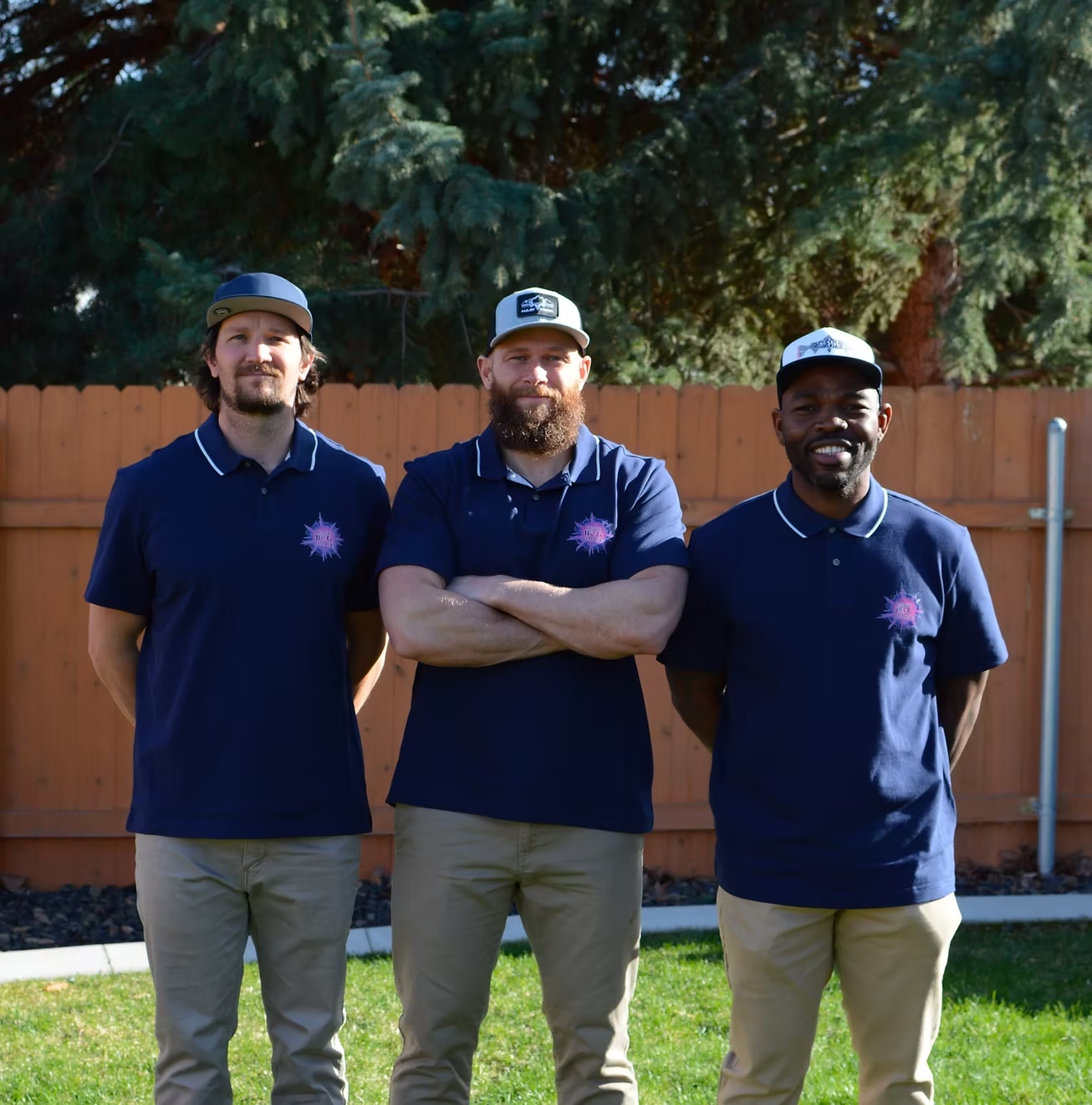
Two rodent problems drive most of the calls in the Treasure Valley, and they’re easy to confuse: mice, primarily house mice and occasional deer mice, get into the home through dime-sized gaps and nest in attic insulation, wall voids, and pantries. Voles, sometimes called “meadow mice” or “field mice”, live in the lawn and landscape, never enter the house, and chew shallow runways through turf that show up as snow-melt damage in spring. Boise Bug Bombers identifies which one is actually there before setting a single trap or bait station, because the treatment is structurally different. Our ISDA-licensed team, Hillard, Jordan, and Bradley, handles the work, Idaho State Department of Agriculture (ISDA)-licensed (#96328), with USDA-approved products that are kid- and pet-safe once dry.
What we treat
How does rodent control work in Boise?
House mouse (Mus musculus) and deer mouse (Peromyscus maniculatus)
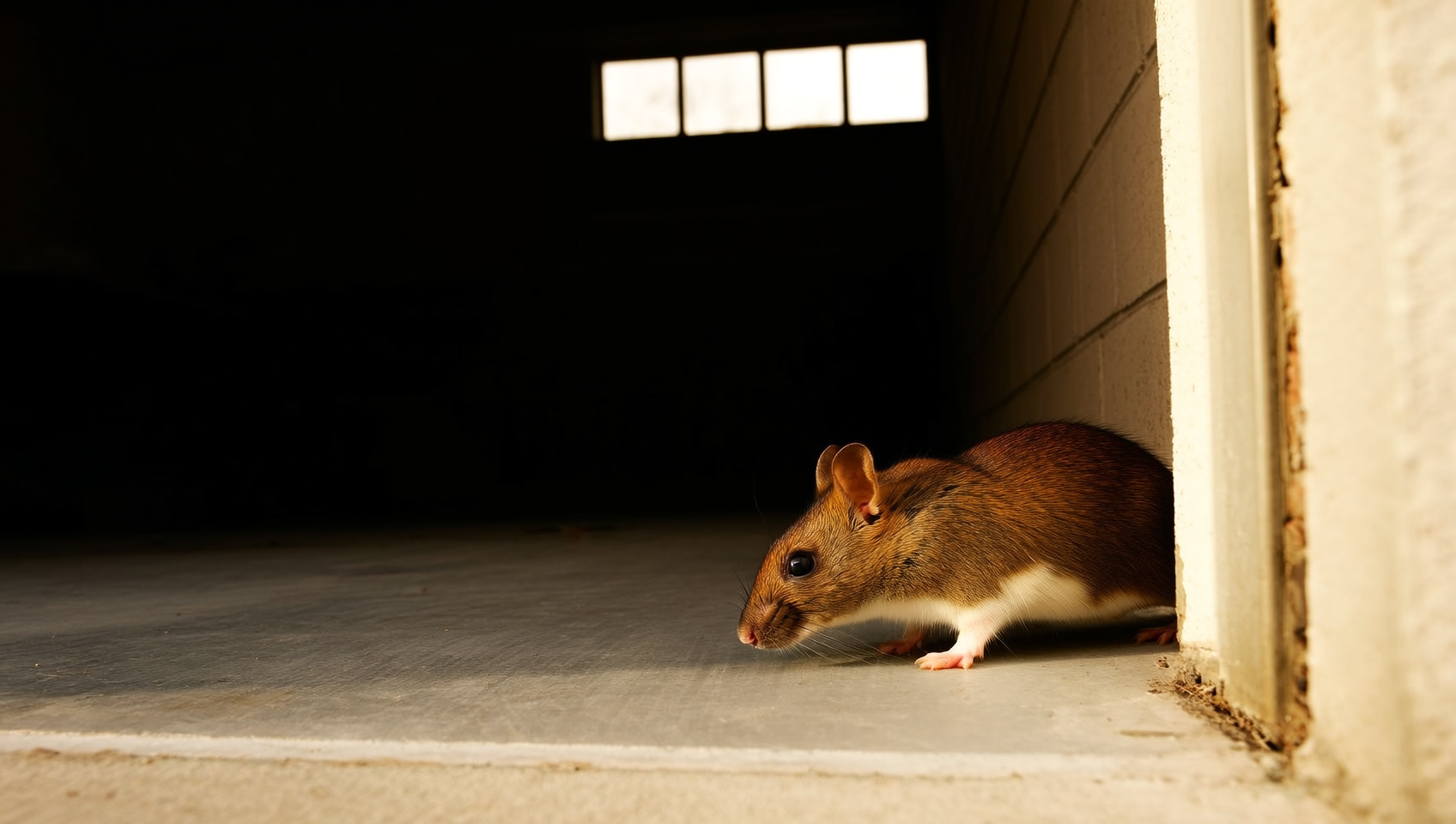
Identification. House mice are about 3-4 inches body length plus a 3-inch tail; uniform light brown to gray; small ears proportional to head; live commensally with humans. Deer mice are slightly larger with a bicolored tail (dark above, white below), larger ears, and white feet; native to Idaho and more common at the rural-urban edge.
Where they live in the Treasure Valley. Attic insulation, wall voids, kitchen pantries, garage corners, behind appliances, under porches, in stored outdoor furniture. Entry points are typically dime-sized or larger gaps, utility penetrations, garage-door corner gaps, dryer vent flaps, foundation cracks, soffit gaps where the roofline meets a chimney chase.
The damage. Contaminated food, gnawed electrical wiring (real fire risk, documented by Boise Fire and Idaho Power), droppings throughout the harborage area, urine staining on insulation, and rapid population growth, a single pair can produce 30-60 descendants in a year under indoor conditions.
The health concern. Per CDC guidance, deer mice are the principal reservoir for hantavirus in the western U.S. including Idaho. The virus is transmitted through aerosolized urine, droppings, or nesting material. Cleanup of confirmed mouse harborage should follow CDC’s wet-cleanup protocol, never sweep or vacuum dry droppings.
What Boise Bug Bombers does. Exterior perimeter inspection for entry points; interior harborage inspection (attic, wall voids if accessible, garage, basement); exclusion recommendations, sealing the entry points is the only durable fix because trapping without exclusion just creates a vacuum for the next mouse; tamper-resistant bait stations at perimeter; mechanical traps inside; documentation of every trap and station location.
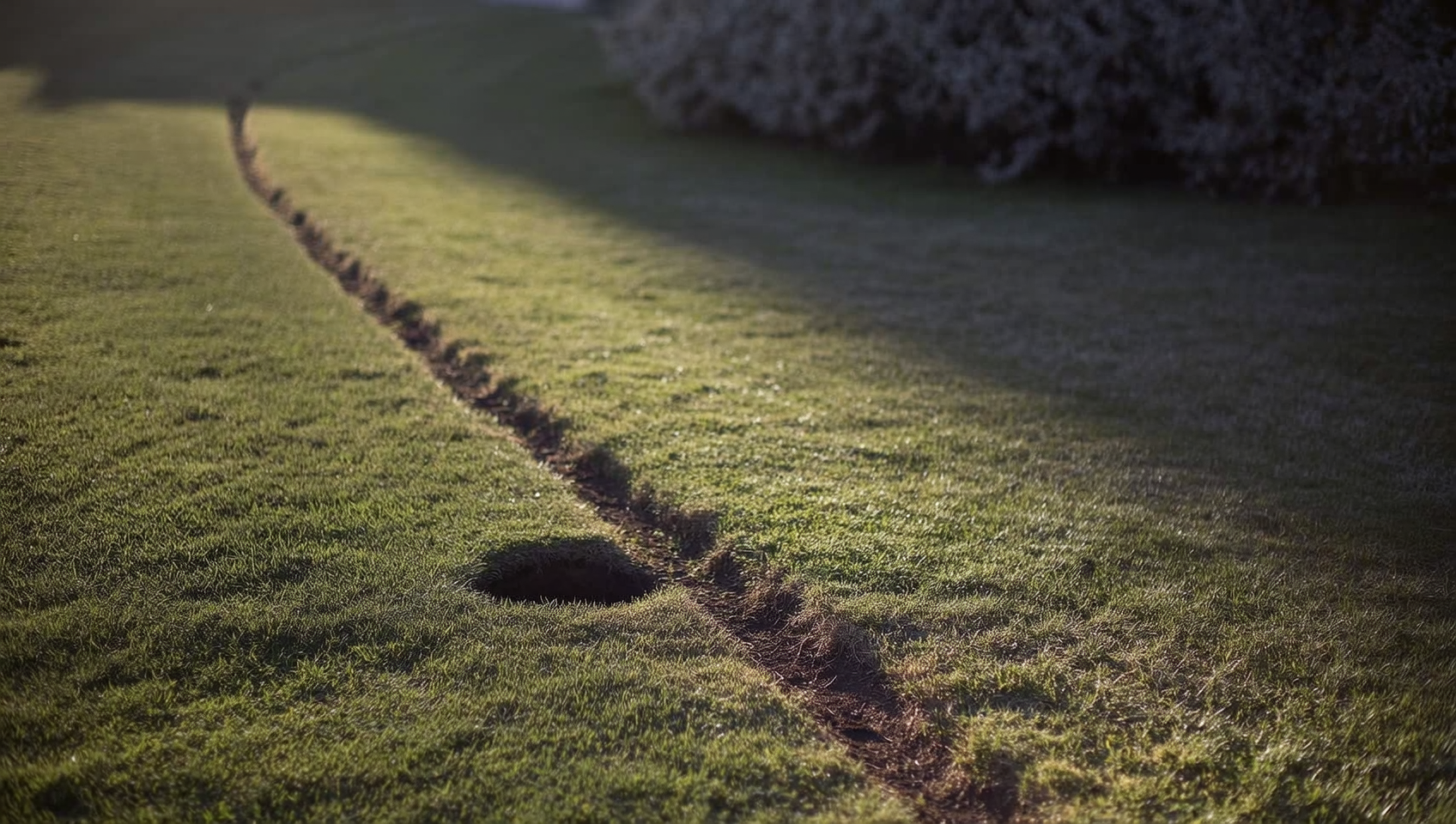
Vole (Microtus species, most commonly the meadow vole, Microtus pennsylvanicus, and the montane vole)
Identification. About 4-7 inches body length with a short blunt tail (about half the body length, not equal to it like a mouse); chunkier than a mouse; rounder face; small ears barely visible above the fur. They live in the lawn and landscape, not in the house. They are sometimes called “meadow mice” or “field mice,” which feeds the confusion.
Where they live in the Treasure Valley. Lawn turf, mulched landscape beds, under landscape rock, along fence lines, around irrigation valve boxes, in dense ground cover, and under snow cover during winter. They build shallow surface runways, narrow tracks of flattened grass, that connect burrow entrances to feeding areas. The University of Idaho Extension documents vole populations across Treasure Valley turf and landscape.
The damage. Shallow runways through the lawn that show up as winding tracks of dead grass at snow melt; girdling damage on the base of young trees and shrubs (voles chew the bark all the way around, often killing the plant); chewed irrigation lines; chewed bulb plantings.
The health concern. Voles are not a significant disease vector for humans, they don’t carry hantavirus, plague, or other zoonoses at meaningful Idaho rates. The damage is to landscape and turf, not health.
What Boise Bug Bombers does. Identification of vole runways and active burrow entrances (active runways have fresh droppings; inactive ones are cobwebbed); landscape habitat assessment, voles need cover, so reducing dense mulch and ground cover near foundation perimeter is half the fix; tamper-resistant bait stations at runway entrances; landscape modification recommendations; spring re-inspection because vole damage peaks under snow cover and shows up after melt.
How it works
Rodent control that actually breaks the population requires three things in sequence: identification (mice or voles, different harborage, different treatment), exclusion (sealing the entry points so the next rodent can’t follow the same path), and ongoing monitoring (tamper-resistant stations checked on a quarterly cadence because populations rebuild seasonally). Setting traps without doing the exclusion work creates a vacuum, kill the resident mouse, and another mouse enters through the same gap two weeks later.
-
Exclusion is the durable fix.
For mice, that’s sealing utility penetrations, garage corner gaps, dryer vent flaps, and soffit-chimney transitions. For voles, that’s reducing dense mulch and ground cover near foundation perimeter and along fence lines.
-
Bait stations belong outside; traps belong inside.
Tamper-resistant exterior stations reduce the rural population that would otherwise be moving toward the house. Interior treatment is mechanical traps in documented locations, not interior bait stations, because dying rodents in wall voids cause their own problem.
-
Quarterly monitoring catches the new wave.
Treasure Valley rodent pressure is seasonal, fall is the heaviest as outdoor populations seek warmth. A one-time treatment without quarterly follow-up gives you a clean winter and a re-infestation next September.
Pricing
Mouse and vole treatment in Boise costs $195 to $395 for an initial treatment plus first 30 days of follow-up, or $40 to $80 per quarterly visit on a plan that includes rodent monitoring. Exclusion work, sealing the entry points so mice can’t get back in, is quoted separately because the scope varies widely. The phone quote is the door quote.
| Service | Price range | Includes |
|---|---|---|
| Initial rodent treatment (mice or voles) | $195-$395 | Inspection, species ID, trap or station placement, 30-day follow-up |
| Most popular Quarterly rodent monitoring plan | $40-$80 per visit | Exterior tamper-resistant stations, runway inspection, seasonal calibration |
| Exclusion work (mouse-proofing entry points) | Quoted on inspection | Sealing utility penetrations, garage corner gaps, dryer vent flaps, soffit transitions |
| Severe infestation / multi-zone | Quoted on inspection | All above + interior wall-void access if needed |
Pricing varies by home size, lot size, and which species is actually there. More on cost →
Mice vs. voles
Mice live in the structure; voles live in the landscape. The three fastest indicators: where the evidence is, what the tail looks like, and what the damage pattern looks like.
| Sign | Mice | Voles |
|---|---|---|
| Where you find evidence | Attic insulation, kitchen pantry, behind appliances, garage corners | Lawn surface, mulched beds, around irrigation valves, fence lines |
| Tail length vs body | Tail nearly equal to body length | Tail roughly half the body length, blunt |
| Damage pattern | Gnawed packaging, droppings in pantry, urine staining, chewed wiring | Shallow runways through turf, girdled tree bark at base, chewed bulbs |
| Seasonal peak | Fall (outdoor populations moving in for warmth) | Late winter / spring (damage shows up at snow melt) |
| Treatment scope | Interior + exterior + exclusion | Exterior landscape + bait stations + habitat modification |
Service areas
Rodent control across the Treasure Valley.
Why Boise Bug Bombers
Rodent control is the service where the wrong identification turns a $295 mouse job into a $1,200 wall-tear-out, or turns vole runways in the lawn into “I set 30 mouse traps in my attic for no reason.” Hillard McMorris is an Idaho State Department of Agriculture (ISDA)-licensed Idaho applicator (#96328) who inspects first, identifies the species, and writes the treatment plan in plain English, including the exclusion work that’s the only thing that actually keeps mice out long-term. He leads the team. He answers (208) 918-2597 himself; the products on his truck are USDA-approved and kid- and pet-safe once dry. Bringing peace and happiness by spreading death and destruction… to your pests.
Mice or voles? Inspection answers it. Don’t guess.
100% satisfaction warranty · Free retreats between quarterly sprays · Idaho-licensed (#96328)
Frequently asked
Frequently Asked Questions
Q1: How do I know if I have mice or voles in Boise?
Mice live in the structure, attic insulation, kitchen pantries, garage corners, wall voids. Voles live in the lawn and landscape, they never enter the home. The fastest distinction is where you’re finding the evidence: droppings in the pantry or attic means mice; winding tracks of dead grass in the lawn at snow melt means voles. Tail length is a backup test: mice have tails nearly equal to body length; voles have stubby tails roughly half body length.
Q2: How much does rodent control cost in Boise?
Initial mouse or vole treatment in Boise costs $195 to $395 including inspection, species identification, trap or station placement, and 30-day follow-up. Quarterly rodent monitoring plans range $40 to $80 per visit. Exclusion work, sealing entry points so mice can’t get back in, is quoted separately because the scope varies widely. Boise Bug Bombers quotes upfront with no upsell.
Q3: Do voles enter the house?
No. Voles live exclusively in the lawn and landscape, they don’t enter homes. Vole damage shows up as shallow runways through turf, girdled bark on the base of young trees and shrubs, chewed irrigation lines, and chewed bulb plantings. If you’re finding evidence inside the house, you have mice, not voles, even though the two species are sometimes both called “field mice” colloquially.
Q4: Are mouse droppings dangerous in Idaho?
Per CDC guidance, deer mice are the principal reservoir for hantavirus in the western United States including Idaho. The virus is transmitted through aerosolized urine, droppings, or nesting material. Confirmed mouse harborage cleanup should follow CDC’s wet-cleanup protocol, never sweep or vacuum dry droppings. House mice carry a lower hantavirus risk but warrant the same cleanup discipline.
Q5: Why is exclusion work separate from rodent treatment?
Exclusion work, sealing the entry points mice use, is the only durable fix for a mouse problem, but the scope varies widely from one home to the next. A mid-century home with a single dryer-vent gap might need an hour of work; a 1940s Boise craftsman with multiple utility penetrations, foundation cracks, and a complicated soffit-chimney transition might need a half-day. Quoting exclusion separately keeps the rodent-treatment price predictable and the exclusion price honest.
Q6: Mice vs rats: which do I have in Boise?
Almost always mice in the Treasure Valley. Norway rat populations exist in commercial Downtown Boise but are uncommon in residential. House mice (Mus musculus) and deer mice (Peromyscus maniculatus) are the two indoor species; voles live in the lawn, never indoors. Boise Bug Bombers field-confirms species before trapping.
Q7: Do you do exclusion work?
Yes. Rodent exclusion is the most important part of any rodent treatment in Boise. Boise Bug Bombers seals entry points (any gap larger than 1/4 inch) with steel wool and caulk after the initial trap-out to prevent re-infestation. Quarterly maintenance keeps gaps sealed as weather and settling open new ones.
Q8: Will the bait hurt my dog?
No. Boise Bug Bombers uses tamper-resistant exterior bait stations that prevent pets and children from accessing the bait directly. Interior protocols rely on snap traps inside enclosed boxes rather than loose bait. If your pet has access to a treated zone, ask for the protocol details before scheduling.
Bringing peace and happiness by spreading death and destruction… to your pests.
Sources
Rodent + mouse control: authoritative references. All third-party links open in a new tab.
- CDC: Rodent Disease + Hantavirus Reference
- EPA: Rodenticide Safety + Tamper-Resistant Bait Stations
- NPIC: Rodenticide Safety + Application Standards
- USDA Wildlife Services: Rodent Damage Management
- University of Idaho Extension: Vole + Mouse Identification
- Idaho Department of Fish and Game: Wildlife Resources
- Penn State Entomology: Deer Mouse Hantavirus Reference
- Idaho Poison Center: Rodenticide Exposure Response