Wasp, hornet, and yellowjacket nest removal in Boise costs $125 to $285 per accessible nest and gets scheduled same-week from April through October. Boise Bug Bombers identifies the species first because paper wasps, yellowjackets, and bald-faced hornets each require a different protocol. ISDA-licensed applicator, kid- and pet-safe once dry, entry points sealed after removal.
SERVICE · ACTIVE-NEST SAME-WEEK · IDAHO-LICENSED APPLICATOR
Wasp, hornet & yellowjacket removal in Boise.
Active nests gone in one visit. Same-week appointments.
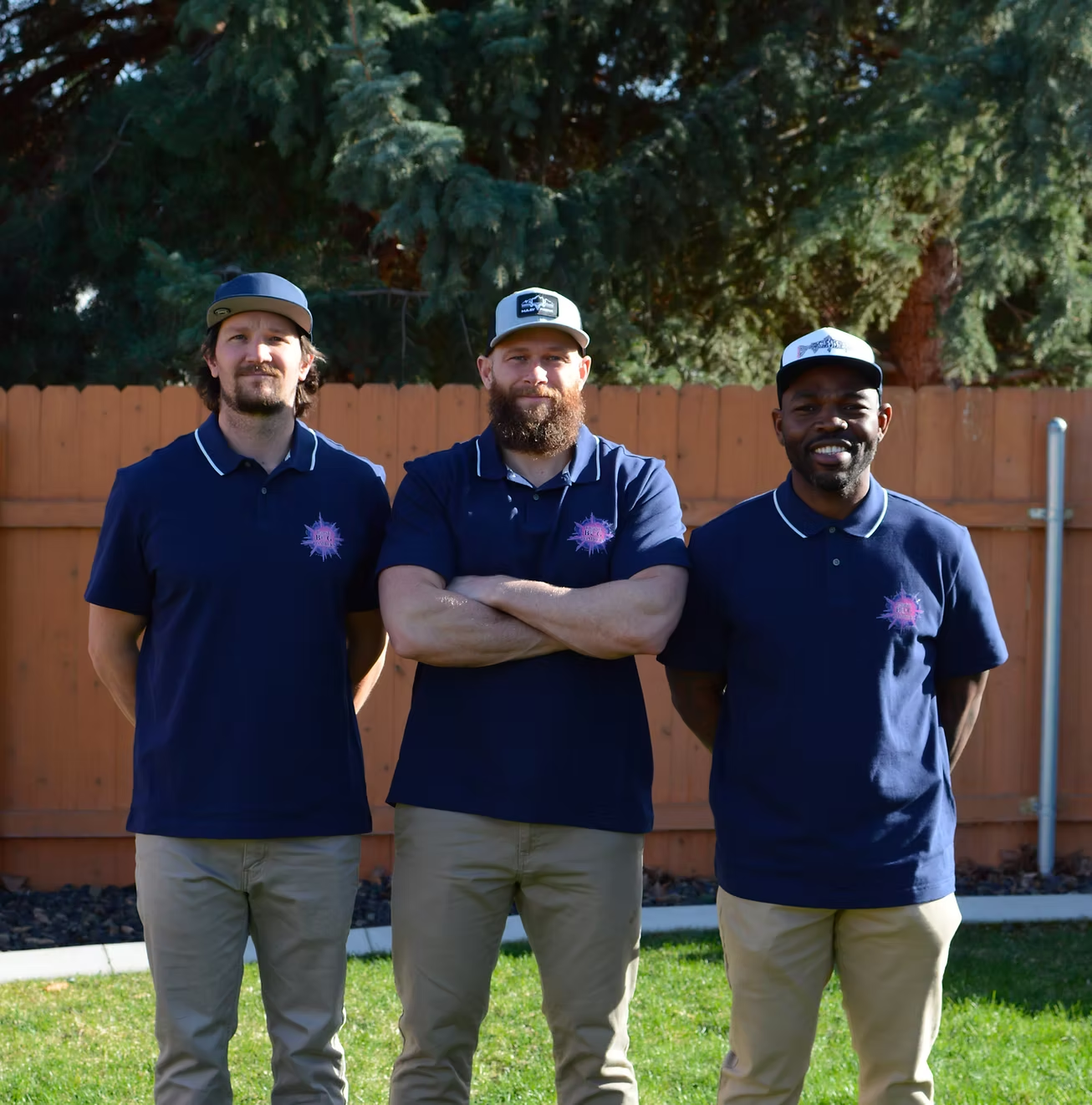
Three stinging-insect species drive most of the calls in the Treasure Valley: paper wasps (the long-legged ones with open umbrella nests under eaves), yellowjackets (the aggressive ground-nesters that get into compost and trash), and bald-faced hornets (the football-sized gray paper nests in trees and roof corners). Boise Bug Bombers identifies the species, treats the nest at the right time of day for the right species, and stays through the foraging knockdown so the colony doesn’t relocate. Active nests booked Monday usually get treated by Friday. Our ISDA-licensed team, Hillard, Jordan, and Bradley, handles the work, Idaho State Department of Agriculture (ISDA)-licensed (#96328), with USDA-approved products that are kid- and pet-safe once dry.
If you live in Boise, Meridian, Nampa, or Eagle and you find a stinging insect nest on your property, it is almost certainly a paper wasp under an eave, a yellowjacket in the ground or a wall void, or a bald-faced hornet in a tree or under a roofline. The three species look similar at a glance but build different nests, defend their nests differently, and require different treatment approaches.
Below: how to tell which is which, what each one means for treatment, and why “spray the nest at dusk with a can” is the wrong answer for two of the three.
How does wasp and hornet removal work in Boise?
2A. Paper wasp (Polistes species)
Identification. Slender body, long dangling legs in flight, about 3/4 to 1 inch. Open, umbrella-shaped paper nests with visible cells, typically hanging from a single stem under eaves, soffits, porch ceilings, mailbox bottoms, and play structures. Colonies are small, usually 50 to 200 individuals at peak.
Where they live in the Treasure Valley. Eaves, soffits, porch ceilings, mailbox interiors, deck-rail undersides, and the inside of bird boxes. They prefer dry, weather-protected surfaces with overhead cover. Common throughout Boise neighborhoods from late May through October.
Defensive behavior. Less aggressive than yellowjackets or bald-faced hornets. Workers defend within about 6 feet of the nest. Stings are painful but usually individual, the colony doesn’t mass-defend unless the nest is physically struck.
What Boise Bug Bombers does. Long-reach equipment for under-eave and high-soffit nests so we treat from a safe distance, no ladders against vinyl siding that crack from leaning, no roof-edge balance acts. Targeted application to the nest plus a residual band on the immediate substrate so returning foragers don’t rebuild within the week.
2B. Yellowjacket (Vespula and Dolichovespula species)
Identification. Compact body, short legs, bright yellow-and-black banded pattern, about 1/2 inch. Nests are concealed, in the ground (most common), in wall voids, in attic insulation, in compost bins, in retaining-wall cavities. Colonies are large, 500 to 5,000 individuals at peak, sometimes more.
Where they live in the Treasure Valley. Ground holes (abandoned rodent burrows, voids under landscape rock, lawn edges), wall voids accessed through siding gaps, attic vents, garage-door tracks, retaining-wall drainage holes, and compost bins. Common throughout the Treasure Valley from June through first hard frost.
Defensive behavior. Highly aggressive when disturbed. The species mass-defends, a single alarm pheromone triggers hundreds of workers. Yellowjacket stings account for the majority of Treasure Valley stinging-insect ER visits. Per CDC guidance, anyone with a known severe sting allergy should carry an epinephrine auto-injector and seek immediate medical care after a sting.
Why “spray the nest” usually fails. Yellowjacket nest entrances are the visible part, the colony itself is 8 to 24 inches behind the entrance, often in a void you can’t see. A can-of-spray application coats the entrance, kills the few workers at the doorway, and triggers a mass defensive response from the colony behind the entrance. Effective yellowjacket treatment uses long-reach dust application that the workers track back into the colony, applied at the right time of day (low foraging activity) for the species.
What Boise Bug Bombers does. Identification of the actual colony location (ground hole, wall void, attic, they look different to a homeowner but they’re the same problem). Long-reach dust application at the entry point that gets carried into the void by returning foragers. Day-after re-inspection on yellowjacket calls because the species’ mass-defense behavior means a partial treatment is worse than no treatment.
What we treat
2C. Bald-faced hornet (Dolichovespula maculata)
Identification. Larger than a paper wasp or yellowjacket, about 3/4 inch, with a distinctive black body and white face. Nests are unmistakable: football- or basketball-sized gray paper structures hanging from tree branches, under rooflines, or from soffits, with a single bottom entrance hole.
Where they live in the Treasure Valley. Tree branches (especially shrubs and small trees 6 to 30 feet up), under steep roof gables, on garage-end gable vents, on commercial signage. Visible because the nests are aerial and large.
Defensive behavior. Highly aggressive within about 10 feet of the nest. The species is not a true hornet, it’s a large aerial yellowjacket, and shares the yellowjacket’s mass-defense behavior. Workers can sting repeatedly.
What Boise Bug Bombers does. Long-reach pole equipment that lets us treat the aerial nest from a safe distance, no ladders, no spray-can range. Treatment is applied at dusk when foragers are inside the nest, with a follow-up to confirm full kill.
What we treat
Yellowjacket (Vespula and Dolichovespula species)
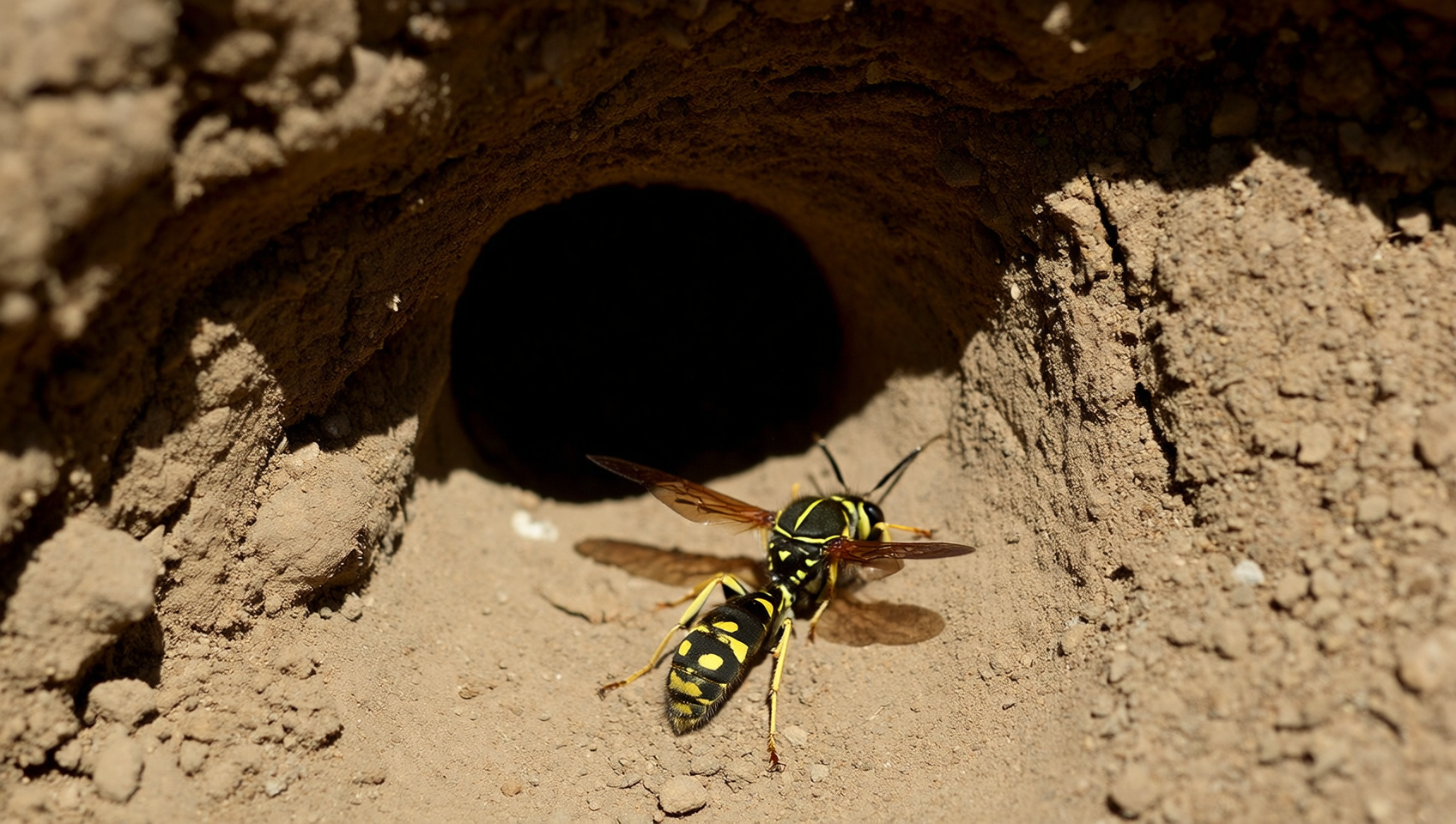
Identification. Compact body, short legs, bright yellow-and-black banded pattern, about 1/2 inch. Nests are concealed, in the ground (most common), in wall voids, in attic insulation, in compost bins, in retaining-wall cavities. Colonies are large, 500 to 5,000 individuals at peak, sometimes more.
Where they live in the Treasure Valley. Ground holes (abandoned rodent burrows, voids under landscape rock, lawn edges), wall voids accessed through siding gaps, attic vents, garage-door tracks, retaining-wall drainage holes, and compost bins. Common throughout the Treasure Valley from June through first hard frost.
Defensive behavior. Highly aggressive when disturbed. The species mass-defends, a single alarm pheromone triggers hundreds of workers. Yellowjacket stings account for the majority of Treasure Valley stinging-insect ER visits. Per CDC guidance, anyone with a known severe sting allergy should carry an epinephrine auto-injector and seek immediate medical care after a sting.
Why “spray the nest” usually fails. Yellowjacket nest entrances are the visible part, the colony itself is 8 to 24 inches behind the entrance, often in a void you can’t see. A can-of-spray application coats the entrance, kills the few workers at the doorway, and triggers a mass defensive response from the colony behind the entrance. Effective yellowjacket treatment uses long-reach dust application that the workers track back into the colony, applied at the right time of day (low foraging activity) for the species.
What Boise Bug Bombers does. Identification of the actual colony location (ground hole, wall void, attic, they look different to a homeowner but they’re the same problem). Long-reach dust application at the entry point that gets carried into the void by returning foragers. Day-after re-inspection on yellowjacket calls because the species’ mass-defense behavior means a partial treatment is worse than no treatment.
ald-faced hornet (Dolichovespula maculata)
Identification. Larger than a paper wasp or yellowjacket, about 3/4 inch, with a distinctive black body and white face. Nests are unmistakable: football- or basketball-sized gray paper structures hanging from tree branches, under rooflines, or from soffits, with a single bottom entrance hole.
Where they live in the Treasure Valley. Tree branches (especially shrubs and small trees 6 to 30 feet up), under steep roof gables, on garage-end gable vents, on commercial signage. Visible because the nests are aerial and large.
Defensive behavior. Highly aggressive within about 10 feet of the nest. The species is not a true hornet, it’s a large aerial yellowjacket, and shares the yellowjacket’s mass-defense behavior. Workers can sting repeatedly.
What Boise Bug Bombers does. Long-reach pole equipment that lets us treat the aerial nest from a safe distance, no ladders, no spray-can range. Treatment is applied at dusk when foragers are inside the nest, with a follow-up to confirm full kill.
Active stinging-insect nests booked before noon usually get treated the same week, typically within 24 to 72 hours depending on location and call volume. Active yellowjacket nests near doorways, play structures, or pet areas are prioritized as same-day calls when possible. Routine wasp prevention (no active nest, just want a perimeter treatment to prevent nesting) gets folded into the next available quarterly visit or scheduled within 5 business days.
| Call type | Typical response |
|---|---|
| Active yellowjacket near entry, play, or pet area | Same-day or next-day |
| Active paper wasp or bald-faced hornet | 24-72 hours |
| Routine wasp prevention (no active nest) | 5 business days or folded into quarterly visit |
| Multi-nest commercial property | 24-72 hours, scoped on inspection |
Compare
Active stinging-insect nests booked before noon usually get treated the same week, typically within 24 to 72 hours depending on location and call volume. Active yellowjacket nests near doorways, play structures, or pet areas are prioritized as same-day calls when possible. Routine wasp prevention (no active nest, just want a perimeter treatment to prevent nesting) gets folded into the next available quarterly visit or scheduled within 5 business days.
| Call type | Typical response |
|---|---|
| Active yellowjacket near entry, play, or pet area | Same-day or next-day |
| Active paper wasp or bald-faced hornet | 24-72 hours |
| Routine wasp prevention (no active nest) | 5 business days or folded into quarterly visit |
| Multi-nest commercial property | 24-72 hours, scoped on inspection |
Wasp, hornet, and yellowjacket nest removal in Boise costs $145 to $245 for a single accessible nest depending on species and height, or is included with the quarterly pest plan at no additional charge for one accessible nest per visit. Multi-nest situations and inaccessible-void yellowjacket treatments are quoted on inspection.
| Service | Price range | Includes |
|---|---|---|
| Single accessible wasp / hornet nest | $145-$245 | Species ID, long-reach treatment, residual band, day-after re-inspection for yellowjackets |
| Multi-nest treatment (2-5 nests) | $245-$425 | All above per nest, walk-through of property for missed nests |
| Yellowjacket void treatment (wall, attic) | $245-$395 | Void access assessment, long-reach dust application, follow-up |
| Quarterly pest plan (includes 1 accessible nest per visit) | $40-$80 per visit | Standard quarterly + wasp nest scan + 1 accessible nest treated free per visit |
Pricing varies by nest height, accessibility, and species. The phone quote is the door quote.
Pricing
Wasp, hornet, and yellowjacket nest removal in Boise costs $145 to $245 for a single accessible nest depending on species and height, or is included with the quarterly pest plan at no additional charge for one accessible nest per visit. Multi-nest situations and inaccessible-void yellowjacket treatments are quoted on inspection.
| Service | Price range | Includes |
|---|---|---|
| Single accessible wasp / hornet nest | $145-$245 | Species ID, long-reach treatment, residual band, day-after re-inspection for yellowjackets |
| Multi-nest treatment (2-5 nests) | $245-$425 | All above per nest, walk-through of property for missed nests |
| Yellowjacket void treatment (wall, attic) | $245-$395 | Void access assessment, long-reach dust application, follow-up |
| Most popular Quarterly pest plan (includes 1 accessible nest per visit) | $40-$80 per visit | Standard quarterly + wasp nest scan + 1 accessible nest treated free per visit |
Pricing varies by nest height, accessibility, and species. The phone quote is the door quote.
Wasp removal is the service where the wrong move escalates fast, a partial yellowjacket treatment is worse than no treatment, and a ladder against vinyl siding is how non-pest-control problems start. Hillard McMorris is an Idaho State Department of Agriculture (ISDA)-licensed Idaho applicator (#96328) who leads the team, brings the long-reach equipment that means nobody’s balancing on a roof edge, and identifies the species before the treatment plan gets written. He answers (208) 918-2597 himself; the products on his truck are USDA-approved and kid- and pet-safe once dry. Bringing peace and happiness by spreading death and destruction… to your pests.
Active nest? Don’t spray it. Call.
Same-week active-nest treatment · 100% satisfaction warranty · Idaho-licensed (#96328)
Frequently Asked Questions
Q1: How fast can you remove a wasp nest in Boise?
Active stinging-insect nests booked before noon usually get treated the same week, typically within 24 to 72 hours depending on location and call volume. Active yellowjacket nests near doorways, play structures, or pet areas are prioritized as same-day calls when possible. Routine wasp prevention with no active nest gets folded into the next quarterly visit or scheduled within 5 business days.
Q2: How much does wasp removal cost in Boise?
Single accessible wasp, hornet, or yellowjacket nest removal in Boise costs $145 to $245 depending on species and nest height. Multi-nest treatments range $245 to $425. Yellowjacket void treatments in walls or attics range $245 to $395 because the void access adds inspection scope. One accessible nest per visit is included free on the quarterly pest plan.
Q3: What’s the difference between a wasp, a hornet, and a yellowjacket?
Paper wasps are slender with long dangling legs and build open umbrella-shaped nests under eaves. Yellowjackets are compact, banded yellow-and-black, and nest concealed in the ground, wall voids, or attics. Bald-faced hornets are larger, black with a white face, and build football-sized gray paper nests aerially. All three are in the vespid family; the treatment approach changes per species because the nest location, colony size, and defensive behavior differ.
Q4: Are wasps active in Idaho winter?
Most wasp activity in Idaho ends after the first hard frost, typically late October to mid-November in the Treasure Valley. Founding queens overwinter alone in protected harborage (wall voids, attics, woodpiles) and emerge in spring to start new colonies. A wasp seen indoors in winter is almost always an overwintering queen woken up by interior heat, not an active colony.
Q5: Why can’t I just spray a wasp nest myself?
A homeowner-grade spray works on small accessible paper wasp nests if treated at dusk from a safe distance. It usually fails on yellowjacket nests because the entrance is the visible part, the colony itself is 8 to 24 inches behind the entrance in a void you can’t see. A partial spray triggers the species’ mass-defense behavior. Bald-faced hornet nests are aerial and large enough that a spray-can range puts you inside the defensive radius.
Bringing peace and happiness by spreading death and destruction… to your pests.
Q6: Do you treat wasps at dusk?
Yes when the situation allows. Yellowjacket ground nests are best treated at dusk or dawn when foraging activity is lowest and most workers are inside the nest. Paper wasp eave nests can be treated during the day with long-reach equipment. Bald-faced hornet aerial nests are dusk treatments.
Q7: How long until the wasp nest is dead?
Active wasps inside the nest die within 30 minutes to 6 hours after direct treatment depending on species and product. The full colony (including newly-emerging brood) dies within 24 to 48 hours. Boise Bug Bombers returns to remove paper wasp and bald-faced hornet nests after the colony is dead.
Q8: What if the wasp nest is inside my wall?
Wall void yellowjacket nests are common in Boise and require dust formulation injected into the entry point. Boise Bug Bombers does NOT recommend sealing the entry point immediately because trapped wasps will chew through interior drywall. Wait 48 hours, confirm activity has stopped, then seal.
Sources
Wasp + hornet removal: authoritative references. All third-party links open in a new tab.
- EPA: Wasp + Hornet Pesticide Products
- University of Idaho Extension: Wasp + Yellowjacket Biology
- CDC NIOSH: Insect Sting First Aid + Anaphylaxis
- Idaho Poison Center: Sting Reaction + Hotline 1-800-222-1222
- Penn State Entomology: Paper Wasp + Yellowjacket Identification
- NPIC: Vespid Treatment Safety
- USDA APHIS: Plant Pest and Disease Management
- Oregon State University Extension: Pacific NW Wasp Calendar
- Bite & sting first aid (Mayo Clinic) →