Professional pest control is generally worth it for confirmed infestations, recurring pests, structural threats like carpenter ants, and households with kids or pets. DIY is fine for one-off ant trails, single wasp nests above the ground, or low-pressure spider sightings — but DIY products are weaker than EPA-restricted professional formulations, and pest misidentification (carpenter ant vs odorous house ant, hobo vs wolf spider) routinely leads homeowners to treat the wrong species.
The honest answer to “DIY or professional?” depends less on price and more on three variables: what pest you actually have (and whether you’ve identified it correctly), how big the population is (one trail vs. a colony), and who’s in the house (kids, pets, immunocompromised). This guide breaks down the trade-offs by factor, gives you eight straight-answer FAQs, and points you to the right next step at the end.
DIY vs Professional pest control: factor-by-factor comparison
| Factor | DIY | Professional |
|---|---|---|
| Cost (one-time) | $15–$80 for store-bought sprays + traps. Recurring purchases. | $150–$350 per visit for a one-time treatment. Higher upfront, lower per-month if recurring. |
| Cost (annual) | $150–$400/yr in recurring product if pressure is steady. | $160–$320/yr on a quarterly plan ($40–$80 × 4 visits) with free re-treats between visits. |
| Effectiveness | Adequate for low-pressure visible pests on a single surface. Often misses the source. | Targets the source: trail to colony, harborage zones, structural entry points. Re-treatment guaranteed. |
| Product access | Consumer-grade pyrethroids (typically lower concentration). No restricted-use products. | EPA-registered residual products + IGRs (insect growth regulators) not sold to consumers. EPA Restricted Use Products list. |
| Pest-ID accuracy | Easy to misidentify — carpenter ants get treated as sugar ants, hobo spiders as wolf spiders, voles as moles. Wrong species → wrong product → wasted spray. | Licensed applicator identifies the species before treating. Idaho carpenter ants need a different protocol than odorous house ants. |
| Safety around kids & pets | Depends entirely on label-reading discipline. Overuse and over-concentration are common DIY mistakes. NPIC pesticide safety guidance. | Applied per label by a licensed applicator. Kid + pet safe once dry (typically < 1 hour). Pre-treatment briefing covers re-entry timing. |
| Time investment | 2–4 hrs initial: research, drive, apply, monitor, reapply. | 30–60 min on-site per visit. No homeowner time on application. |
| Guarantee | None. If it doesn’t work, you buy another product. | Re-treatment between scheduled quarterly visits at no charge if covered pests come back. Written. |
| Recurring prevention | Requires homeowner discipline — buy, reapply, rotate products, track pressure. | Scheduled. Same applicator each visit. Year-over-year baseline data. |
When DIY makes sense
- One ant trail, identified as a non-carpenter species, on a single surface. A consumer bait works fine.
- A single accessible wasp nest under an eave, treated at dusk with a wasp jet spray.
- One mouse, with droppings localized to a single area, addressed with snap traps + entry-point sealing.
- Spider population is low enough that you’re seeing one or two webs a month, not daily.
When professional is the right call
- Suspected carpenter ants. Carpenter ants tunnel into structural wood. Misidentifying them as sugar ants and treating with consumer spray will hide the problem while damage continues. The U.S. EPA’s “Do You Have Pests?” guidance recommends pest identification first.
- Confirmed bed bug infestation. DIY treatment of bed bugs has the lowest success rate of any common DIY pest job. EPA-aligned protocols require multiple visits and IGR formulations not available retail.
- Active black widow population. Black widow bites carry medical significance; misidentification (wolf spider vs. brown recluse vs. black widow) is common. The University of Idaho Extension insects program publishes Idaho-specific species ID resources.
- Rodent issue beyond one mouse. Once you’re seeing droppings in more than one area or hearing scratching in walls, you need exclusion work, not just traps.
- Kids, pets, pregnancy, or immunocompromised household members. Application discipline matters more than product strength; a licensed applicator follows the label.
Frequently asked questions
Is professional pest control worth it?
For confirmed infestations, recurring pest pressure, structural threats (carpenter ants, rodents), or households with kids/pets, yes — professional treatment uses EPA-restricted products and species-correct protocols that DIY can’t match. For one-off low-pressure incidents, DIY is reasonable. A quarterly plan typically costs $160–$320/year in the Treasure Valley, comparable to recurring DIY product spend with significantly higher efficacy and a written guarantee.
Can I do pest control myself?
Yes, for limited cases: one ant trail, a single accessible wasp nest, a single mouse caught early. The two most common DIY failure modes are (1) misidentifying the pest and applying the wrong product, and (2) treating where the pest is visible without treating the harborage/colony source. If either applies, professional treatment is more cost-effective.
What can a professional do that DIY can’t?
Three things: (1) access to EPA-registered restricted-use products and insect growth regulators (IGRs) not sold to consumers; (2) species-correct identification before treatment — particularly important for carpenter ants, hobo spiders, and bed bugs; (3) a written re-treatment guarantee. Licensed applicators in Idaho carry an ISDA Professional Applicator certification.
Is DIY pest control safe around kids and pets?
Consumer pesticides are generally safe when applied exactly per label. The risk is application discipline: over-concentration, mixing products, or skipping the re-entry interval. NPIC publishes consumer pesticide safety resources at npic.orst.edu. A licensed applicator applies per label and briefs the homeowner on re-entry timing (typically < 1 hour to dry).
DIY vs professional pest control cost?
One-time DIY runs $15–$80 in product. A one-time professional treatment runs $150–$350 depending on pest and home size. Annualized: DIY recurring product spend often lands at $150–$400/year if pest pressure is steady, and a quarterly professional plan in the Treasure Valley runs $160–$320/year ($40–$80 × 4 visits) with free re-treats between visits.
When should I stop DIY and call a professional?
Stop DIY when: you’ve treated twice in 30 days and the population isn’t dropping; you suspect carpenter ants or bed bugs (both require professional protocols); you’re seeing pests in multiple rooms or hearing scratching in walls; or the pest is black widow / hobo spider where misidentification carries medical significance.
Are store-bought pesticides as effective as professional products?
No. Consumer products use pyrethroid-family active ingredients at lower concentrations and lack the residual chemistries + insect growth regulators used in professional treatments. The U.S. EPA maintains the registered-product database; restricted-use products are reserved for certified applicators. For ant trails on one surface, consumer products perform reasonably; for colony-level or structural infestations, the gap is significant.
Does DIY work for rodents, wasps, or spiders?
One mouse, caught with snap traps + entry-point sealing within a week of first sighting — DIY works. One wasp nest under an eave, treated at dusk — DIY works. One spider web, removed with the spider hand-killed — DIY works. Beyond those one-off cases, professional treatment performs significantly better because rodents need exclusion (not just trapping), wasps need void-pack treatment for hidden nests, and spider populations need harborage-zone treatment, not visible-web treatment.
Next steps
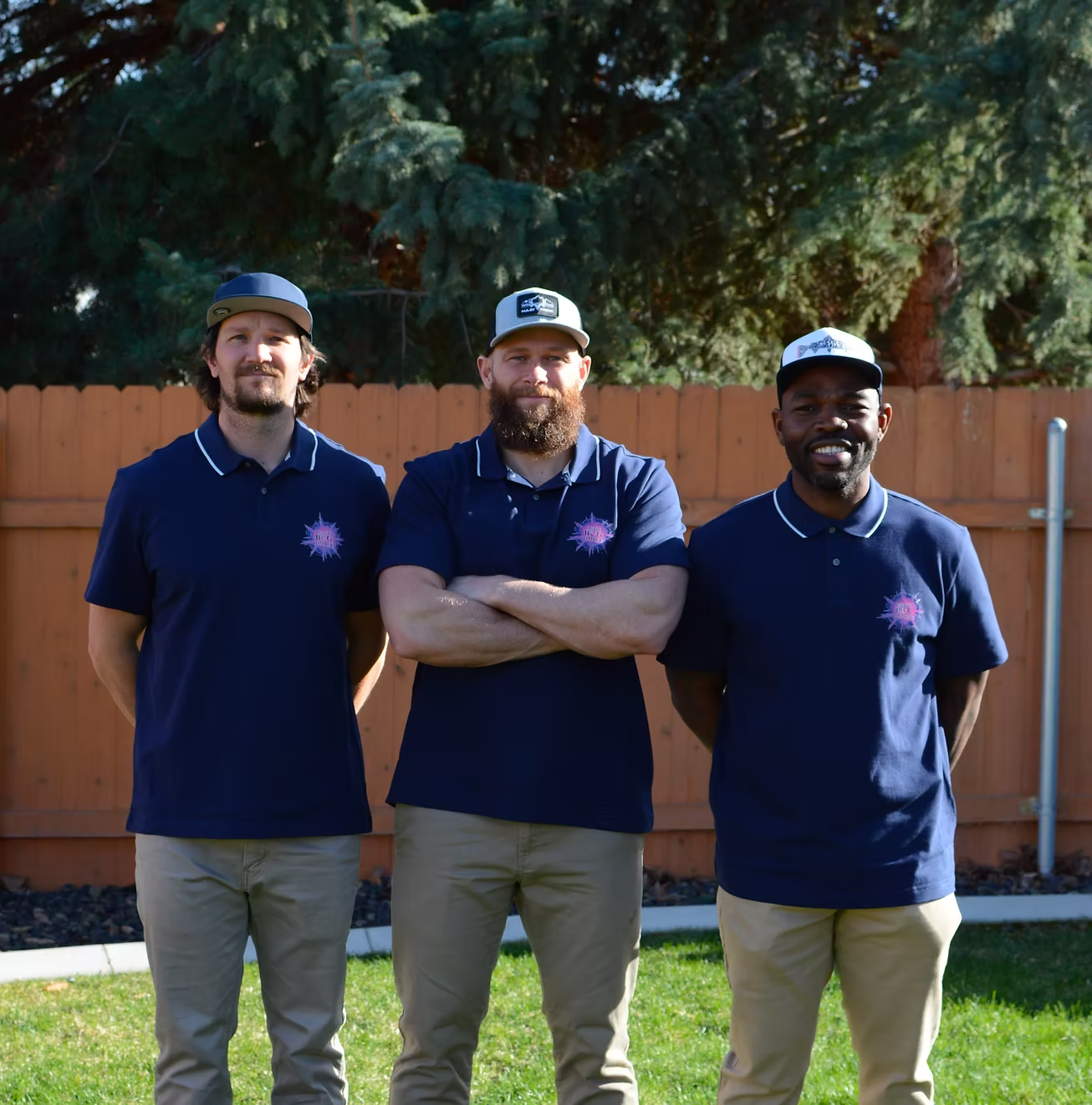
If DIY isn’t the right fit for what you’re seeing — or if you’ve already tried it and the pressure isn’t dropping — Boise Bug Bombers handles all six pest categories across Boise, Meridian, Nampa, Eagle, Kuna, and Caldwell. Quarterly service runs $40–$80 per visit with free re-treats between visits, and Hillard McMorris answers the phone personally during business hours.
- Quarterly pest control plan → the recurring program
- All six service categories → the silo overview
- Rodent control → if DIY trapping isn’t working
- Spider control → for black widow / hobo / yellow sac concerns