
SPECIES · IDAHO · HUNTER (NO WEB) · SUMMER-FALL HOME INVADER
The yellow sac spider in Idaho.
The pale spider you find on a wall at 2 a.m. What it is, what to do about it.
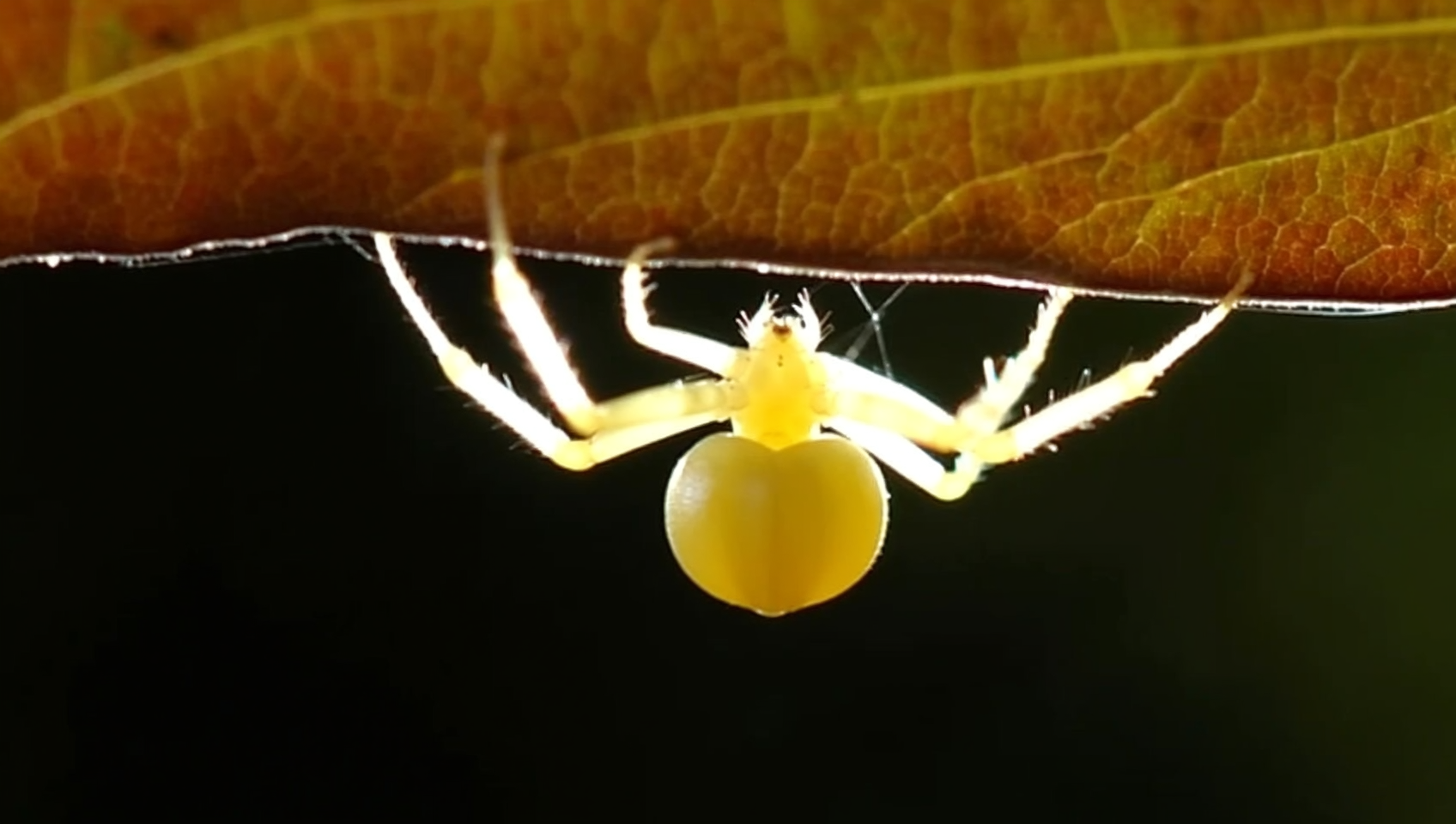
The yellow sac spider (Cheiracanthium inclusum and Cheiracanthium mildei) is the small, pale yellow-green spider Treasure Valley residents most often find walking across an interior wall or ceiling at night. It is a hunting spider, not a web-builder, it builds a small silk sac in corners, behind picture frames, or where the wall meets the ceiling, and emerges at night to hunt other insects. Bites can be locally painful and produce mild redness or swelling, but yellow sac bites are not medically significant in healthy adults and rarely require medical intervention. Yellow sac spiders are most active in late summer and fall.
A yellow sac spider is identified by four features: a small, pale yellow to yellow-green body about 0.2-0.4 inches long; a slightly darker stripe down the abdomen visible in good light; dark-tipped front legs that are noticeably longer than the others; and the absence of a web, instead, a small flat silk sac tucked into a corner where wall meets ceiling, behind a picture, or in a fold of curtain or upholstery.
What the body looks like
- Body color: pale yellow, cream, or yellow-green; sometimes with a slight tan cast
- Body shape: smooth, elongated abdomen; no glossy sheen
- Size: approximately 0.2-0.4 inches (5-10mm) body length, small
- Abdominal marking: sometimes a slightly darker dorsal stripe; otherwise uniform pale color
- Front legs: noticeably longer than the other three pairs, with dark-tipped tarsi (the “feet”)
- Mouthparts: dark chelicerae that contrast with the pale body, visible up close
What the silk sac looks like
Yellow sac spiders do not build hunting webs. Instead, they build a small flat sac of dense white silk where they shelter during the day. The sac is typically:
- The size of a thumbnail or smaller
- Tucked into a high corner where two walls meet, or where a wall meets the ceiling
- Behind picture frames, hanging fixtures, or in the fold of a curtain
- In closet corners, behind stored boxes, or in pleats of upholstered furniture
- Sometimes in outdoor locations: under siding, in foundation gaps, in landscape lighting fixtures
A yellow sac on the wall is a strong field-ID marker, most other Idaho spiders found indoors either build a full web (cobweb spiders, hobo spiders) or a flat sheet (funnel weavers). The dense little white pillow tucked in a corner is distinctive.
Yellow sac spider vs. common look-alikes
- vs. ghost spider: ghost spiders are similar in size and color but lack the dark-tipped front legs; they also have a more clearly visible dorsal pattern
- vs. juvenile crab spider: crab spiders are crab-shaped (wider than long) and hold their legs out to the sides; sac spiders hold legs forward like typical spiders
- vs. spiderling of a larger species: look for a sac. A pale spider with a small white silk sac in the corner above it is almost certainly a sac spider regardless of size
Yellow sac spiders in Treasure Valley homes are typically found at upper-wall or ceiling level, the exact opposite of where hobo spiders and black widows are found. They favor smooth interior surfaces, particularly in rooms with consistent insect activity (rooms with houseplants, near windows, around exterior doors), and they are most often noticed in late summer through early fall when populations peak.
Where to look
- Where wall meets ceiling. The single most common sac location. Inspect with a flashlight along the top edge of walls in living rooms and bedrooms.
- Behind picture frames and wall art. Sacs are often tucked behind the upper corners of hanging frames.
- Curtain and drape pleats. Particularly behind curtains that haven’t been moved in weeks.
- Closet corners. Especially high corners and along the underside of closet shelves.
- Behind furniture. Headboards, the backs of bookshelves, the underside of dining chairs.
- Window frames and sills. Where consistent insect activity attracts the hunting spider.
- Outdoor sheltered spots. Under siding, in foundation gaps, in landscape lighting fixtures, yellow sacs do move indoors from outdoor harborage in cooler weather.
Seasonal pattern
- April-June: populations build slowly; sightings rare
- July-September: peak indoor activity, late summer is when yellow sac spiders move into homes in numbers and when residents find them on bedroom ceilings at night
- October-November: populations remain active but begin declining as cold weather arrives
- December-March: sharp drop-off; surviving spiders remain in protected indoor harborage
Yellow sac spider bites are not medically significant in healthy adults. The bite can be locally painful, described by some patients as similar to a wasp sting, and may produce mild redness, swelling, or itching that resolves over 1-3 days. Bites typically occur when the spider is pressed against skin (inside clothing left on the floor, in bedding pulled off a yellow sac harborage, or when the spider is rolled against the body during sleep). Most yellow sac bites do not require medical care; seek evaluation if local symptoms are severe, persist beyond 5 days, or show signs of infection.
What to do if bitten
- Wash the bite area with soap and water.
- Apply a cool compress to reduce local pain and swelling.
- Take an over-the-counter antihistamine if itching is significant.
- Monitor for infection, expanding redness, warmth, pus, fever, and seek medical evaluation if any develop.
- For unusual symptoms or persistent pain beyond 5 days, call the Idaho Poison Center at 1-800-222-1222 for guidance.
What yellow sacs are not
- Not on the CDC venomous spider list
- Not a cause of necrotic lesions in current peer-reviewed evidence
- Not aggressive, bites are almost always defensive, not pursuit
If you find a yellow sac spider on a wall or ceiling, capture it under a glass and release it outside or vacuum the sac and spider together. Reduce overall population by sealing exterior entry points, treating exterior perimeter for the insects yellow sacs hunt (the food source), and removing existing sacs from upper wall corners during routine cleaning. Yellow sac spiders are responding to interior insect activity, reducing that activity reduces the sac population.
Do
- Capture under a glass with a sheet of paper or thin card slid underneath
- Vacuum old sacs and visible spiders during regular cleaning, particularly along the wall-ceiling junction
- Reduce the food source: treat the exterior perimeter for ants, gnats, and other small insects that draw the hunting spider indoors
- Seal entry points: weather-strip exterior doors, repair window screens, seal foundation cracks
Don’t
- Don’t ignore multiple sightings in summer-fall. Multiple yellow sacs indicate established interior harborage and a sustained interior insect population worth investigating.
- Don’t try to fog or aerosol whole rooms. Yellow sacs are hunters, reactive sprays catch the visible spider but leave the sacs and the insect population that drew them in.
Treatment: Boise → · Meridian → · Nampa → · Eagle →
Yellow sac spider prevention is interior pest reduction plus exterior exclusion plus quarterly perimeter treatment. The spiders move indoors to hunt; reducing the prey reduces the spider. Seal exterior entry points, treat the perimeter on a quarterly schedule, and do a seasonal sweep of upper wall-ceiling corners to remove existing sacs.
Quarterly prevention actions
- Inspect and remove sacs from upper wall corners, behind picture frames, and inside curtain pleats during routine cleaning
- Weather-strip exterior doors and repair gaps that admit small flying insects
- Reduce exterior lighting that attracts night-active insects near doorways (switch to warm-color or motion-activated)
- Repair window screens; check screens around bedrooms first
- Schedule a quarterly perimeter treatment that targets both the spider and its insect food source
- Boise spider control →
- Meridian spider control →
- Nampa spider control →
- Eagle spider control →
- All spider services →
Found one on the ceiling at 2 a.m.? Yes, it’s that one. Call.
Idaho State Department of Agriculture (ISDA)-licensed Idaho applicator · 100% satisfaction warranty · Kid + pet safe once dry
Frequently Asked Questions
Q1: Are there yellow sac spiders in Idaho?
Yes. The yellow sac spider (Cheiracanthium inclusum and Cheiracanthium mildei) is established throughout the Treasure Valley including Boise, Meridian, Nampa, and Eagle. They are most commonly found in late summer through early fall at upper-wall and ceiling level inside homes, where they build small flat silk sacs in corners and behind picture frames.
Q2: How do you identify a yellow sac spider?
A yellow sac spider is small (0.2-0.4 inches), pale yellow to yellow-green, with dark-tipped front legs that are noticeably longer than the other three pairs. They do not build webs, instead they shelter in a small flat silk sac tucked into a corner where wall meets ceiling, behind a picture frame, or in a curtain pleat.
Q3: Are yellow sac spider bites dangerous?
Yellow sac spider bites are not medically significant in healthy adults. The bite can be locally painful and may produce mild redness or swelling that resolves over 1-3 days. The CDC does not list the yellow sac spider as a venomous spider of public health concern. Seek medical evaluation if symptoms are severe, persist beyond 5 days, or show signs of infection.
Q4: Why do yellow sac spiders come inside?
Yellow sac spiders move indoors to hunt other insects. They are responding to interior insect activity, small flies, gnats, ants, and other prey. Reducing the indoor insect population through exterior sealing, perimeter treatment, and lighting changes near doorways is the most effective way to reduce yellow sac sightings inside the home.
Q5: How do you get rid of yellow sac spiders?
Yellow sac spider control combines three actions: remove existing sacs from upper-wall corners and behind picture frames during cleaning; reduce the insect food source through exterior perimeter treatment and entry-point sealing; and schedule a professional quarterly treatment that targets the spider and the prey insects together. Reactive sprays on individual spiders do not address the sacs or the insect population that drew them in.