EAGLE, ID · ADA COUNTY · ISDA-LICENSED
Spider control in Eagle.
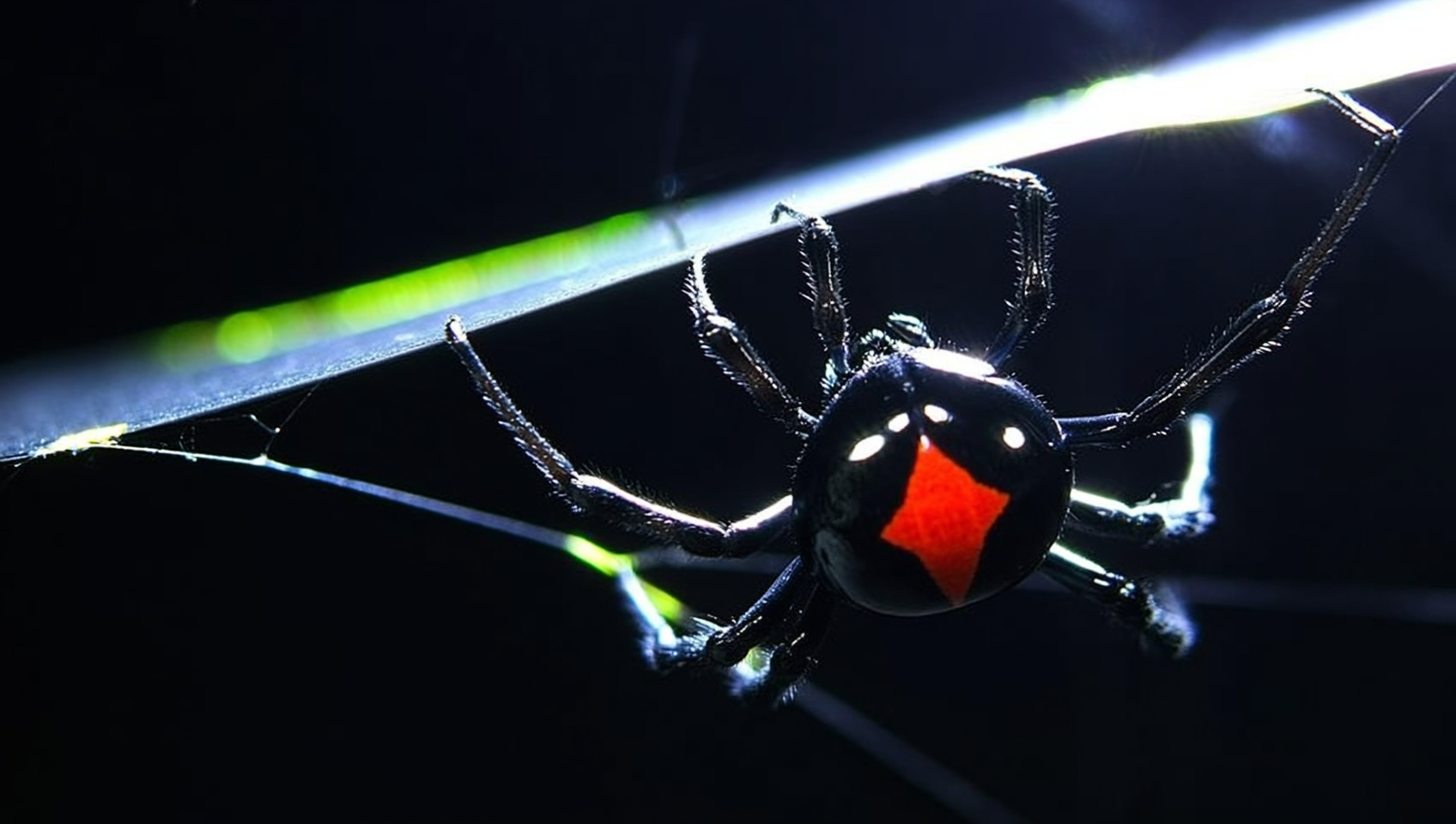
Black widow. Hobo. Yellow sac. Treated at the harborage, especially the foothill edge.
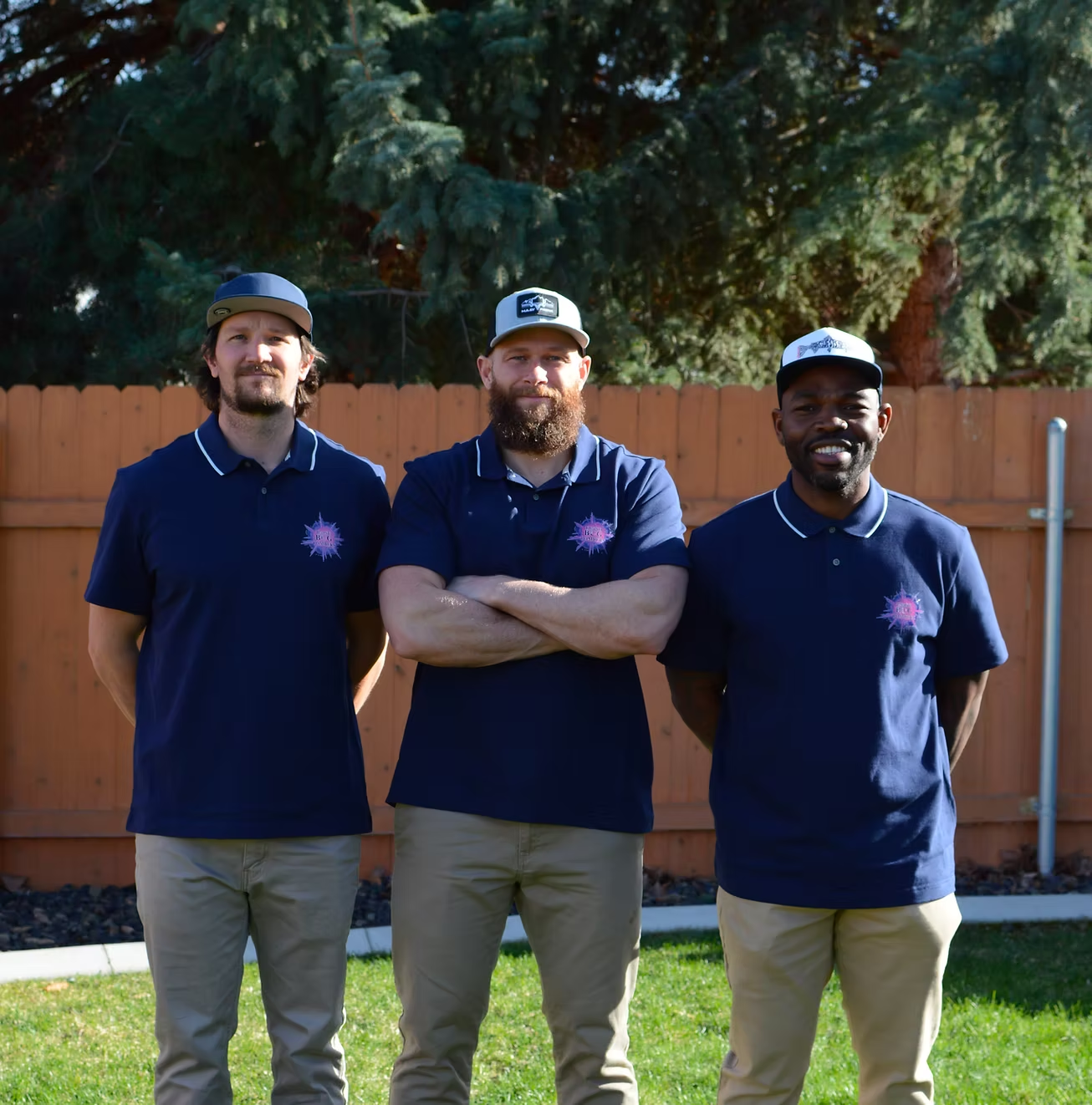
Boise Bug Bombers treats spider infestations across Eagle, ID 83616, black widows in Eagle Foothills retaining walls and sage-adjacent landscaping, yellow sac in Eagle Foothills irrigated landscape harborage, hobo spiders in Banbury Meadows and Country Club crawl spaces, using species-identified harborage treatment by Idaho State Department of Agriculture (ISDA)-licensed Idaho applicator Hillard McMorris (#96328). USDA-approved products that are kid- and pet-safe once dry.
If you find a spider inside an Eagle, ID 83616 home, it is most likely a yellow sac spider, a hobo spider, or a common house spider, with black widows appearing in retaining walls, irrigation boxes, crawl spaces, and sage-adjacent outdoor harborage on properties along the Eagle Foothills corridor and near Eagle Rock Reservoir. Yellow sac spider activity in Eagle is elevated by the irrigated landscaping common in Two Rivers, Banbury Meadows, and the Reflection Ridge corridor. The brown recluse is not established in Idaho.
2A. What we find in Eagle homes by zone
- Eagle Foothills (north + northeast edge). Newer construction, sage-adjacent. Black widow harborage in retaining walls, irrigation boxes, and crawl spaces; yellow sac in newer wall-ceiling junctions where landscape irrigation is heavy. Highest black widow density in Eagle.
- Banbury Meadows + BanBury Golf Course corridor. Established subdivisions, mature landscaping, irrigation-heavy. Yellow sac in irrigated landscape harborage; hobo in older crawl spaces; occasional black widow in detached garages.
- Two Rivers + Reflection Ridge. Newer construction. Yellow sac dominates indoor activity because of irrigated landscaping density; hobo in basement corners; sporadic black widow in irrigation-box harborage.
- Country Club + Lexington Hills. Mix of older 1990s and newer infill. Hobo in older crawl spaces; yellow sac in newer construction; occasional black widow in older detached garages.
- Castlebury + Eagle Island State Park-adjacent. Riverfront-adjacent, mature trees. Mixed pressure, yellow sac in irrigated landscape harborage; hobo in crawl spaces; black widow in retaining walls along the Boise River foothills corridor.
- Old downtown Eagle + State Street corridor. Older homes, smaller lots. Standard spider pressure load, hobo, yellow sac, common house.
2B. Why Eagle Foothills spider treatment is different
The Eagle Foothills corridor, north and northeast of State Street, climbing toward Eagle Rock Reservoir, is the highest black widow density zone in Eagle. Sage, granite outcrops, and retaining walls supporting foothill-grade landscaping create harborage that doesn’t exist in flat subdivision terrain. The Two Rivers and Reflection Ridge corridor has the opposite profile: less black widow harborage, but higher yellow sac density because of the irrigation-fed landscape vegetation. Treatment plans differ by zone.
What we treat
If you find a spider inside an Eagle, ID 83616 home, it is most likely a yellow sac spider, a hobo spider, or a common house spider, with black widows appearing in retaining walls, irrigation boxes, crawl spaces, and sage-adjacent outdoor harborage on properties along the Eagle Foothills corridor and near Eagle Rock Reservoir. Yellow sac spider activity in Eagle is elevated by the irrigated landscaping common in Two Rivers, Banbury Meadows, and the Reflection Ridge corridor. The brown recluse is not established in Idaho.
What we find in Eagle homes by zone
- Eagle Foothills (north + northeast edge). Newer construction, sage-adjacent. Black widow harborage in retaining walls, irrigation boxes, and crawl spaces; yellow sac in newer wall-ceiling junctions where landscape irrigation is heavy. Highest black widow density in Eagle.
- Banbury Meadows + BanBury Golf Course corridor. Established subdivisions, mature landscaping, irrigation-heavy. Yellow sac in irrigated landscape harborage; hobo in older crawl spaces; occasional black widow in detached garages.
- Two Rivers + Reflection Ridge. Newer construction. Yellow sac dominates indoor activity because of irrigated landscaping density; hobo in basement corners; sporadic black widow in irrigation-box harborage.
- Country Club + Lexington Hills. Mix of older 1990s and newer infill. Hobo in older crawl spaces; yellow sac in newer construction; occasional black widow in older detached garages.
- Castlebury + Eagle Island State Park-adjacent. Riverfront-adjacent, mature trees. Mixed pressure, yellow sac in irrigated landscape harborage; hobo in crawl spaces; black widow in retaining walls along the Boise River foothills corridor.
- Old downtown Eagle + State Street corridor. Older homes, smaller lots. Standard spider pressure load, hobo, yellow sac, common house.
Why Eagle Foothills spider treatment is different
The Eagle Foothills corridor, north and northeast of State Street, climbing toward Eagle Rock Reservoir, is the highest black widow density zone in Eagle. Sage, granite outcrops, and retaining walls supporting foothill-grade landscaping create harborage that doesn’t exist in flat subdivision terrain. The Two Rivers and Reflection Ridge corridor has the opposite profile: less black widow harborage, but higher yellow sac density because of the irrigation-fed landscape vegetation. Treatment plans differ by zone.
Step 1, Inspection. Hillard walks the perimeter, the crawl space (if accessible), the garage, the basement window wells, the retaining walls (for foothill-edge homes), and the irrigated landscape perimeter. Photographs harborage. Species-ID before treatment.
Step 2, Species ID. The plan names which species are present, hobo, yellow sac, black widow, common house.
Step 3, Targeted treatment. USDA-approved residual applied to harborage zones. For black widow in Eagle Foothills retaining walls and irrigation boxes, treatment includes the harborage location. For yellow sac in Two Rivers or Banbury Meadows irrigated landscaping, exterior insect-reduction at the landscape perimeter is often part of the plan.
Step 4, Follow-up. Quarterly plans include free retreats between scheduled sprays. One-time treatments include a 14-day re-inspection for egg-sac hatches.
Step 5, Documentation. Treatment plan + species ID + product list emailed after the visit.
How it works
-
Inspection
Hillard walks the perimeter, the crawl space (if accessible), the garage, the basement window wells, the retaining walls (for foothill-edge homes), and the irrigated landscape perimeter. Photographs harborage. Species-ID before treatment.
-
Species ID
The plan names which species are present, hobo, yellow sac, black widow, common house.
-
Targeted treatment
USDA-approved residual applied to harborage zones. For black widow in Eagle Foothills retaining walls and irrigation boxes, treatment includes the harborage location. For yellow sac in Two Rivers or Banbury Meadows irrigated landscaping, exterior insect-reduction at the landscape perimeter is often part of the plan.
-
Follow-up
Quarterly plans include free retreats between scheduled sprays. One-time treatments include a 14-day re-inspection for egg-sac hatches.
-
Documentation
Treatment plan + species ID + product list emailed after the visit.
| Service | Eagle price range |
|---|---|
| One-time spider treatment | $175-$295 |
| Quarterly pest plan (includes spider) | $40-$80 per visit |
| Black widow-specific treatment | $225-$375 |
Phone quote matches door quote. Foothill-edge homes with active black widow harborage may price toward the upper end.
Full Idaho pricing breakdown →
Pricing
| Service | Eagle price range |
|---|---|
| One-time spider treatment | $175-$295 |
| Most popular Quarterly pest plan (includes spider) | $40-$80 per visit |
| Black widow-specific treatment | $225-$375 |
Phone quote matches door quote. Foothill-edge homes with active black widow harborage may price toward the upper end.
Boise Bug Bombers serves all of Eagle, ID 83616, Banbury Meadows, Eagle Foothills, Two Rivers, Country Club, Lexington Hills, Castlebury, Reflection Ridge, and the State Street and Eagle Road residential corridors, with a typical 20-minute drive from the Winstead Park shop at 1650 N Hilton St in Boise. Same-week appointments are standard.
Hillard McMorris leads the team. Idaho State Department of Agriculture (ISDA)-licensed Idaho applicator (#96328), the person who answers (208) 918-2597. From Grant Dillard’s Google review: “Always willing to go above and beyond to help me out with my spider issue in the crawlspace.” The Eagle Foothills homeowner who finds a black widow in a retaining wall is exactly the call that earns that kind of follow-through.
→ /about/
Get an Eagle spider treatment this week.
Same-week Eagle appointments · 100% satisfaction warranty · Kid + pet safe
Bringing peace and happiness by spreading death and destruction… to your pests.
Q1: How much does spider control cost in Eagle, ID?
Spider control in Eagle costs $175 to $295 for a one-time treatment, $40 to $80 per visit on a quarterly plan that includes spider control plus eight other pest categories, or $225 to $375 for targeted black widow harborage treatment. Foothill-edge homes with active black widow harborage may price toward the upper end. Phone quote matches door quote.
Q2: Are there black widow spiders in Eagle, Idaho?
Yes. The Western black widow (Latrodectus hesperus) is established throughout Eagle and is most commonly found along the Eagle Foothills corridor, in retaining walls, irrigation boxes, crawl spaces, and sage-adjacent landscaping near Eagle Rock Reservoir. Newer Two Rivers and Reflection Ridge construction has fewer harborage points but still sees occasional activity in irrigation-box harborage.
Q3: What spiders are in Eagle, ID homes?
Yellow sac spiders (in Two Rivers and Banbury Meadows irrigated-landscape harborage and wall-ceiling corners), hobo spiders (in Country Club and Lexington Hills crawl spaces), and black widows (in Eagle Foothills retaining walls and outdoor harborage) are the three spider species most commonly found in Eagle homes. The brown recluse is not established in Idaho.
Q4: Does Boise Bug Bombers serve all of Eagle?
Yes. Boise Bug Bombers serves all of Eagle, ID 83616, Banbury Meadows, Eagle Foothills, Two Rivers, Country Club, Lexington Hills, Castlebury, Reflection Ridge, and the State Street and Eagle Road residential corridors. Drive time from the Boise shop is about 20 minutes; same-week appointments are standard.
Q5: Why does Eagle Foothills have more black widows than the rest of Eagle?
The Eagle Foothills corridor north of State Street climbs toward Eagle Rock Reservoir through sage, granite outcrops, and retaining walls supporting foothill-grade landscaping. Those features create the harborage black widows prefer, features that don’t exist in flat Two Rivers or Reflection Ridge subdivisions where yellow sac dominates instead.
- Eagle Foothills (north + northeast edge)
- Eagle Rock Reservoir
- Banbury Meadows + BanBury Golf Course
- Two Rivers
- Reflection Ridge
- Country Club + Lexington Hills
- Castlebury + Eagle Island State Park-adjacent / Boise River foothills corridor
- State Street + Eagle Road residential corridor
- ZIP 83616
- 1650 N Hilton St drive time to Eagle
Sources
Authoritative references for spider control in Eagle and the broader Treasure Valley. All third-party links open in a new tab.
- CDC NIOSH: Venomous Spider Identification
- EPA: Safe Spider Control Methods
- University of Idaho Extension: Spider Biology + IPM
- National Pesticide Information Center (NPIC)
- Idaho Poison Center: Spider Bite Response
- Ada County Idaho: Local Government Resources
Q6: How quickly can you schedule spider control in Eagle?
Boise Bug Bombers offers same-week scheduling for spider control across Eagle and the broader Treasure Valley. Most Eagle appointments are booked within 2-4 business days. Emergency calls (active wasp nests, post-bite black widow situations) get same-day scheduling whenever possible. Call (208) 918-2597 for next-available.
Q7: What does spider control cost in Eagle, Idaho?
Spider control in Eagle typically runs $40 to $80 per visit on a quarterly plan or $175 to $295 for a one-time treatment depending on home size and pest pressure. Boise Bug Bombers quotes upfront on the phone with no surprise add-ons. Phone quote matches the door quote.
Q8: Are your spider control products safe for kids and pets in Eagle?
Yes. Boise Bug Bombers uses USDA-approved residual products that are kid- and pet-safe once dry. Drying time is typically 1 to 2 hours after application in Eagle. ISDA-licensed applicator Hillard McMorris reviews any per-product re-entry recommendations at the appointment.