
SPECIES · IDAHO · YMYL, HANTAVIRUS RISK (DEER MOUSE)
Mice in Idaho, the house mouse, the deer mouse, and why the species ID matters.
Identification. Where they live. Why deer mouse exposure is a public health concern. What to do.
The two mouse species Idaho homeowners most often encounter are the house mouse (Mus musculus) and the deer mouse (Peromyscus maniculatus). The species identification matters: the house mouse is a domestic-environment pest with no significant zoonotic risk at typical exposure levels, while the deer mouse is the primary carrier of Sin Nombre virus, the agent of hantavirus pulmonary syndrome (HPS), a rare but serious illness with high case fatality. Idaho is part of the deer mouse’s range and Idaho has documented HPS cases. If you find rodent droppings in an outbuilding, cabin, garage, basement, or any structure that has been closed up for an extended period, follow CDC cleanup guidance and do not sweep or vacuum. Call the Idaho Poison Center at 1-800-222-1222 for guidance if you have potential exposure questions.
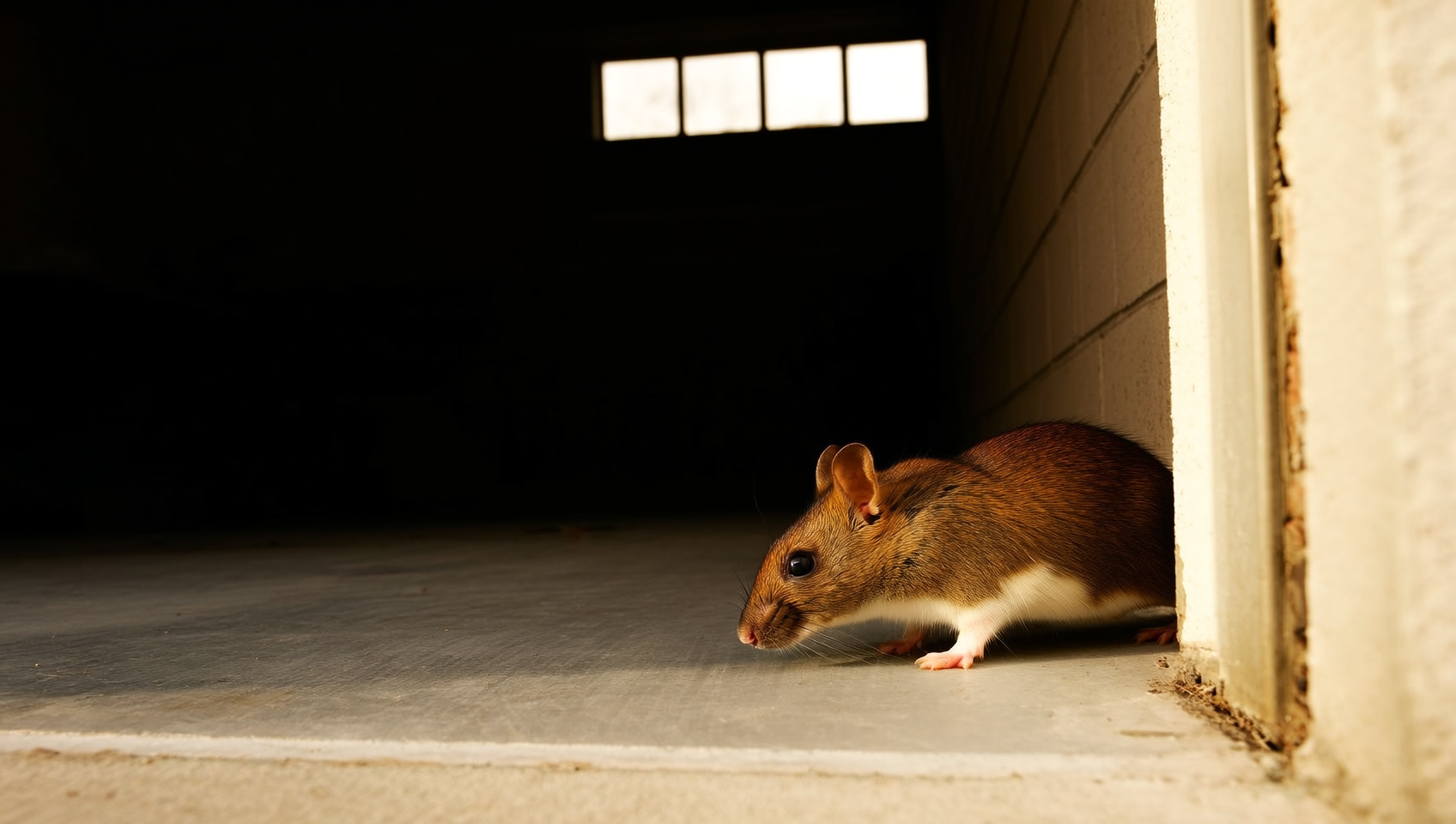
A house mouse (Mus musculus) is uniformly grey-brown above and lighter grey below, with small eyes, a nearly hairless tail about as long as the body, and large ears. A deer mouse (Peromyscus maniculatus) has a sharp two-tone color pattern, brown to grey-brown on top, distinctly white on the belly and feet, with large dark eyes, large ears, and a clearly bicolored tail (dark on top, white underneath). The two-tone deer mouse coloring is the single best field-ID marker: if the underside is white and clearly separated from the brown top, it is a deer mouse, and the cleanup discipline changes.
House mouse (Mus musculus)
- Body color: uniformly grey-brown above, slightly lighter grey or buff below, no sharp two-tone separation
- Body size: about 2.5-3.5 inches body length
- Tail: nearly hairless, about as long as the body, uniformly colored
- Ears: large relative to body
- Habitat: indoor structures, walls, attics, basements, kitchens. The mouse that breeds in human structures.
- Risk: standard rodent sanitation concerns (food contamination, allergens, structural damage); not a primary hantavirus vector
Deer mouse (Peromyscus maniculatus)
- Body color: sharp two-tone, brown to grey-brown above, distinctly white below; white feet
- Body size: about 2.5-4 inches body length; slightly larger than house mouse
- Tail: bicolored, dark on top, white underneath; about as long as the body, slightly furred
- Eyes: noticeably large, dark, “deer-like”
- Ears: large
- Habitat: primarily outdoor, but moves into outbuildings, cabins, garages, sheds, and seasonally-used structures in fall and winter. Will move into occupied homes from adjacent fields and ground cover.
- Risk: primary carrier of Sin Nombre virus (the agent of hantavirus pulmonary syndrome) in the western United States, including Idaho
Why the species ID matters
The two species look superficially similar but have different public-health implications. The two-tone color pattern of the deer mouse, white belly, white feet, bicolored tail, is the diagnostic indicator that changes the cleanup discipline from standard rodent sanitation to CDC hantavirus cleanup protocol. If you cannot ID the species and the structure has been closed up (cabin, garage, shed, outbuilding, basement room not used regularly), default to deer mouse protocol per CDC guidance, the conservative assumption.
House mice live primarily inside structures year-round and prefer interior harborage near food and water, wall voids, attics, basements, kitchen cabinets, behind appliances, and inside stored boxes. Deer mice live primarily outdoors in fields, ground cover, and woodpiles and move into structures seasonally, especially in fall and winter, with strong preference for outbuildings, garages, sheds, cabins, and infrequently-used basement spaces. Both species enter through gaps as small as a quarter inch.
House mouse harborage in Treasure Valley homes
- Wall voids and attic insulation. Particularly along plumbing chases and electrical penetrations
- Kitchen cabinets and pantry. Under sinks, behind toe-kicks, in lower cabinet corners
- Behind major appliances. Refrigerator, dishwasher, range, warm motor areas with food residue
- Stored boxes and ground-contact storage. In basements, garages, attics
- Utility rooms. Around water heaters, furnaces, behind washer/dryer
Deer mouse harborage in Treasure Valley homes
- Outbuildings. Detached sheds, workshops, pole barns, pump houses, the highest-probability deer mouse harborage
- Garages. Particularly detached garages with stored items and infrequent traffic
- Cabins and seasonally-used structures. The classic CDC hantavirus exposure scenario
- Basements with exterior access. Daylight basements, walkout basements, basements with crawl space adjacency
- Foundation perimeter with adjacent field cover. Properties bordering grasslands, sage cover, or undeveloped lots, Foothills neighborhoods, Eagle properties with adjacent BLM land, rural-edge Nampa and Meridian properties
Seasonal pattern
- April-September: populations build in field harborage; indoor activity minimal
- October-November: fall move-in period, both species seek warm indoor harborage; this is when most Idaho mouse calls come in
- December-March: populations established in interior harborage; breeding indoors; damage peaks
- March-April: activity remains high until weather warms and outdoor harborage becomes viable again
Hantavirus pulmonary syndrome (HPS) is a rare but serious illness caused by Sin Nombre virus, which is carried in the western United States primarily by the deer mouse (Peromyscus maniculatus). Humans are exposed by breathing aerosolized particles from deer mouse urine, droppings, or nesting material, most often when sweeping or vacuuming an enclosed space (cabin, shed, garage, basement room) that has been closed for an extended period. Idaho has documented HPS cases. The Idaho Department of Health & Welfare and the CDC publish cleanup protocols designed specifically to prevent aerosolization. Do not sweep or vacuum suspected deer mouse droppings or nesting material, wet the area first with disinfectant, then wipe up.
Symptoms and timeline
- Incubation: typically 1-8 weeks after exposure
- Early symptoms: fever, fatigue, severe muscle aches (especially thighs, hips, back, shoulders), and sometimes headache, dizziness, chills, abdominal pain
- Later symptoms: 4-10 days after early symptoms, coughing, shortness of breath, the rapid onset of fluid in the lungs (this is the pulmonary syndrome)
- Severity: HPS has a case fatality rate around 30-40%. Early recognition and supportive medical care substantially improve outcomes.
If you have potential deer mouse exposure (recent cleanup in an outbuilding, cabin, or closed-up structure) and develop fever with severe muscle aches in the 1-8 weeks following, seek medical evaluation immediately and disclose the rodent exposure. Treatment is supportive and earlier is better.
CDC cleanup protocol, what to do if you find droppings in an outbuilding or cabin
- Ventilate the area for at least 30 minutes before entering. Open doors and windows.
- Wear gloves (rubber, latex, vinyl, or nitrile). Wear an N95 respirator if available and the contamination is significant.
- Do not sweep or vacuum. This aerosolizes the virus and is the highest-risk action.
- Wet the area with disinfectant. Use a 1:10 bleach-to-water solution or an EPA-registered hospital disinfectant. Spray and let soak for at least 5 minutes.
- Wipe up with paper towels while still wet. Place towels and droppings in a sealed plastic bag.
- Double-bag and dispose in covered outdoor trash.
- Disinfect gloves before removal, then wash hands thoroughly with soap and water.
For significant contamination, large quantities of droppings, dead mice, nesting material in enclosed spaces, call a licensed pest control professional with appropriate PPE and disposal protocols. If you have potential exposure questions, call the Idaho Poison Center at 1-800-222-1222.
Mouse treatment combines four actions: identify the species (house mouse vs deer mouse, different cleanup protocol); seal entry points (any gap larger than 1/4 inch admits a mouse); deploy snap traps in identified runways and behind/under known harborage; and apply tamper-resistant rodenticide bait stations for sustained suppression in inaccessible spaces. CDC hantavirus cleanup protocol applies whenever deer mouse contamination is possible.
What works
- Species identification first. Determine whether you are dealing with house mouse, deer mouse, or both. This changes cleanup discipline.
- Exclusion. Seal all gaps larger than 1/4 inch with steel wool + caulk or 1/4-inch hardware cloth. Common entry points: garage door corners, utility penetrations, dryer vents, gaps under exterior doors, foundation cracks, roof-soffit junctions.
- Snap traps in runways. Standard snap traps along walls in identified harborage (mice run along walls, not across open floor). Bait with peanut butter, set perpendicular to wall, trigger facing the wall.
- Tamper-resistant bait stations. For sustained interior or perimeter suppression. EPA-registered rodenticide. Stations must be inaccessible to children, pets, and non-target wildlife.
- CDC hantavirus cleanup protocol for outbuildings, cabins, garages, or any structure where deer mouse exposure is possible.
What doesn’t work
- Ultrasonic repellers. No peer-reviewed evidence of meaningful effectiveness against mice.
- Glue boards as primary tool. High non-target catch rate (insects, bird in attic, snake in basement) and animal-welfare concerns. Use sparingly if at all.
- Letting it ride. Mouse populations double in about 50 days under good conditions. A single observed mouse in October is a colony in February.
Treatment: Boise → · Meridian → · Nampa → · Eagle →
Mouse prevention is exclusion plus storage discipline plus an annual fall sweep. Seal gaps larger than 1/4 inch, store food in sealed containers, keep stored items off the floor and away from walls, manage the foundation perimeter, and inspect outbuildings and garages annually before fall. Hantavirus risk reduction adds: open and ventilate closed structures before entering, follow CDC cleanup protocol for any droppings found.
Annual prevention actions
- October: seal exterior gaps (doors, utility penetrations, soffits, dryer vents), ventilate outbuildings before fall, install bait stations at outbuilding perimeters if applicable
- November-March: monitor interior for signs (droppings in cabinets, gnaw marks on food packaging, urine stains under sinks), set snap traps at first sign
- April-September: maintain exclusion, keep stored items off floor, trim foundation perimeter vegetation
- Before opening any closed structure (cabin, garage, outbuilding, basement room): ventilate for 30+ minutes before entering, follow CDC cleanup protocol for any droppings or nesting material found
The Idaho pest calendar →
Voles vs mice, which do I have →
- Boise rodent control →
- Meridian rodent control →
- Nampa rodent control →
- Eagle rodent control →
- Voles vs mice (Learn) →
Droppings in the garage or outbuilding? Don’t sweep them. Call.
Idaho State Department of Agriculture (ISDA)-licensed Idaho applicator · CDC hantavirus protocol for outbuildings · Kid + pet safe bait stations
Frequently Asked Questions
Q1: What is the difference between a house mouse and a deer mouse?
A house mouse is uniformly grey-brown above and lighter below, with a nearly hairless uniformly colored tail. A deer mouse has a sharp two-tone color pattern, brown on top, distinctly white on the belly and feet, with a bicolored tail that is dark on top and white underneath. The two-tone deer mouse coloring is the diagnostic marker that changes cleanup protocol because the deer mouse is the primary carrier of hantavirus in the western United States.
Q2: Are deer mice in Idaho a hantavirus risk?
Yes. The deer mouse (Peromyscus maniculatus) is the primary carrier of Sin Nombre virus, the agent of hantavirus pulmonary syndrome, in the western United States including Idaho. Idaho has documented hantavirus cases. Exposure typically occurs when sweeping or vacuuming dried droppings or nesting material in closed-up outbuildings, cabins, garages, or basement spaces. Follow CDC cleanup protocol, do not sweep or vacuum, wet with disinfectant first.
Q3: How do you safely clean up mouse droppings in Idaho?
Per CDC protocol: ventilate the area for at least 30 minutes before entering, wear gloves and an N95 respirator if available, do not sweep or vacuum, wet the contaminated area with a 1:10 bleach-water solution or EPA-registered disinfectant, let soak for 5 minutes, wipe up with paper towels, double-bag for disposal, and wash hands thoroughly. For significant contamination call a licensed pest control professional. For exposure questions call the Idaho Poison Center at 1-800-222-1222.
Q4: How do mice get into Idaho homes?
Mice enter through any gap larger than 1/4 inch. Common entry points in Treasure Valley homes are garage door corners, utility penetrations (plumbing, electrical, gas), dryer vents, gaps under exterior doors, roof-soffit junctions, and foundation cracks. House mice are indoor pests year-round; deer mice move in from adjacent fields and ground cover in fall and winter, especially in properties bordering open land in Eagle, the Foothills, and rural-edge Nampa and Meridian.
Q5: How do you get rid of mice in your home?
Mouse control combines four actions: identify the species (house mouse vs deer mouse, different cleanup discipline); seal all gaps larger than 1/4 inch with steel wool and caulk or hardware cloth; deploy snap traps along walls in identified runways with peanut butter bait; and apply tamper-resistant rodenticide bait stations for sustained suppression in inaccessible spaces. CDC hantavirus cleanup protocol applies whenever deer mouse contamination is possible.